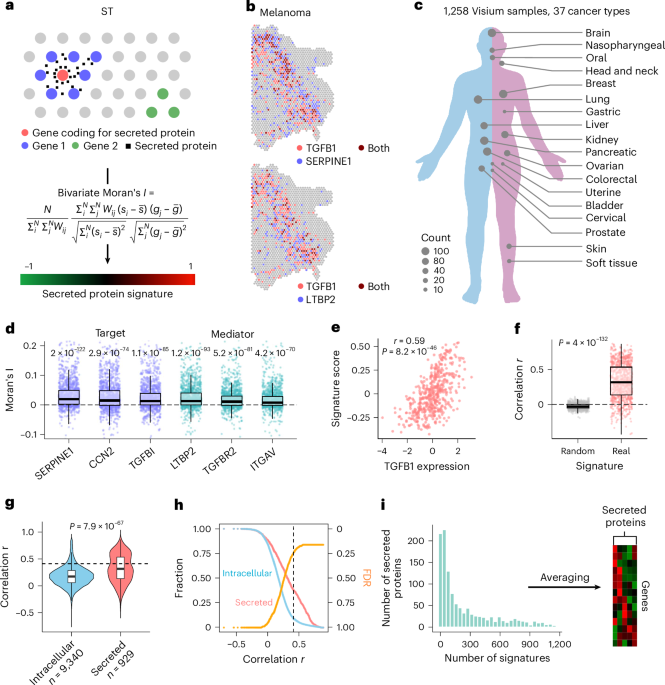
A Nature report highlights SecAct, a framework designed to infer secreted protein signaling activities from transcriptomic data. The approach is aimed at improving how researchers study intercellular communication, especially in settings where direct measurement of signaling proteins is difficult.
Secreted proteins play a central role in how cells influence one another, but their activity is not always easy to capture from standard gene-expression datasets alone. SecAct addresses that gap by using transcriptomic information to estimate signaling activity, giving scientists another way to examine how signals may move between cells and shape biological responses.
The topic connects with broader work on the human secretome and with cancer immunology research, where understanding cell-to-cell signaling can be especially important. By focusing on secreted protein activity rather than only listing expressed genes, the framework may help researchers interpret complex communication networks in tissues and disease contexts.
While the trimmed report does not provide full methodological detail, the central advance is clear: SecAct offers a computational route to study secreted signaling from existing transcriptomic data. That makes it a potentially useful tool for researchers exploring cell communication across basic biology and biomedical research.