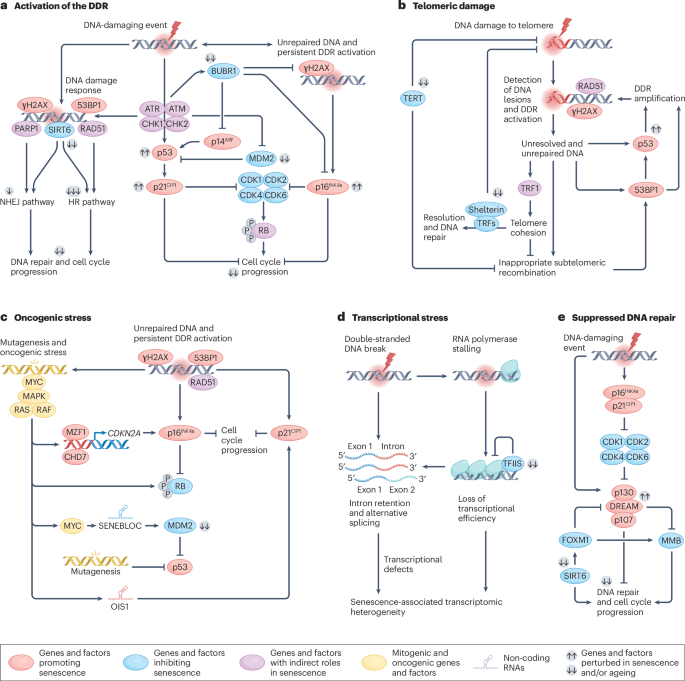
A new Nature review examines how genomic, epigenomic and transcriptomic regulation controls cellular senescence, a stress-responsive cell state with major importance for ageing biology and tissue homeostasis. Rather than treating senescence as a single fixed outcome, the review presents it as a complex, dynamic and heterogeneous process shaped by multiple layers of molecular control.
The article focuses on how senescence begins, how it is maintained and how it can spread through tissues. By organizing the topic around initiation, maintenance and propagation, the review highlights that senescent cells are governed by interacting gene programs, chromatin states and RNA-level changes rather than by one simple pathway.
An important theme is that cellular senescence varies across biological contexts. The review points to differences in stress responses and molecular states, reinforcing the idea that senescence can look different depending on cell type and conditions. That complexity matters because senescence influences both normal tissue balance and broader ageing-related biology.
Overall, the review frames cellular senescence as a central research area for understanding how cells respond to damage and time. Its survey of genomic, epigenomic and transcriptomic mechanisms offers a broad overview of the regulatory networks behind this cell state and why they matter for ageing research.





