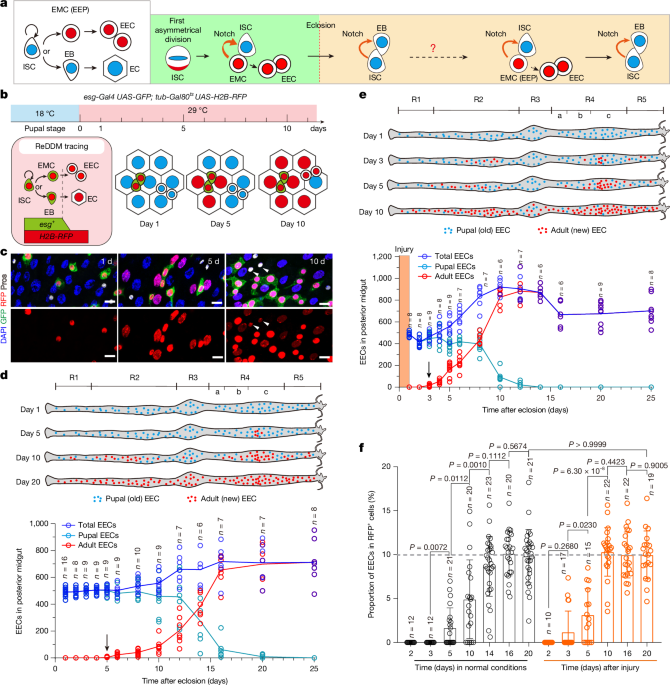
Research published in Nature points to an unusual way adult intestinal stem cells control what they produce in the fly gut. In Drosophila, these cells do not appear to choose their next fate at random. Instead, the study describes a system in which intestinal stem cells keep track of how many times they have undergone self-renewal divisions.
According to the report, that counting process is tied to an epigenetic mechanism. The key shift happens after a set number of divisions: rather than continuing to generate enterocytes, the stem cells switch and produce an enteroendocrine mother cell every ninth division.
This finding suggests that stem cell multipotency in the adult intestine can be regulated by a built-in record of division history. In practical terms, the work links a cell's past rounds of self-renewal to its future differentiation outcome, offering a clearer picture of how the gut maintains a balance between different cell types.
Because the study was carried out in Drosophila, the results add to a widely used model for understanding stem cell behavior in living tissues. The broader significance is that stem cells may rely on internal timing or counting programs, not only external signals, to decide when to change fate.