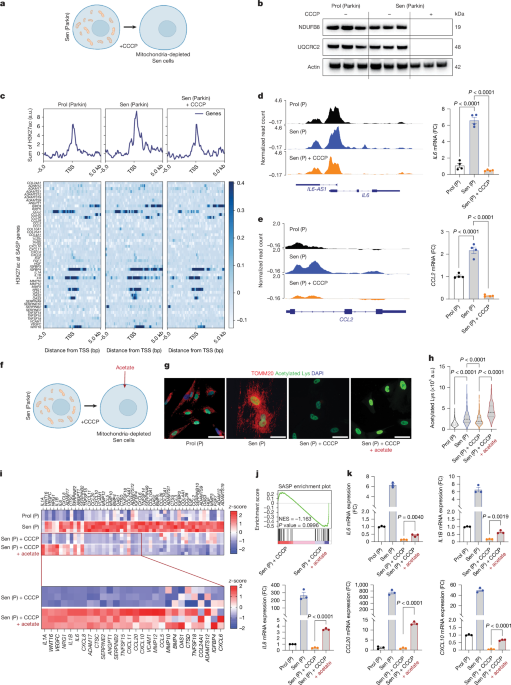
A new Nature study examines how mitochondrial metabolism helps control the senescence-associated secretory phenotype, or SASP, in aging cells. The work points to a close link between mitochondrial activity and epigenetic regulation, suggesting that metabolic changes inside senescent cells can directly influence inflammatory gene programs.
According to the study description, mitochondria-derived acetyl-CoA plays a central role in this process. Higher levels of this metabolite promote histone acetylation, a chromatin change associated with more open DNA regions and stronger gene activity. In senescent cells, that appears to increase chromatin accessibility at inflammatory gene loci, helping drive the SASP.
The findings also highlight SLC25A1, a mitochondrial citrate transporter, as an important part of the pathway. Inhibiting SLC25A1 reduced the metabolic and epigenetic effects tied to SASP activation, indicating that blocking this route may dampen inflammatory signaling in senescent cells.
Overall, the study adds to growing evidence that cellular senescence is shaped not only by DNA damage and stress responses, but also by metabolic-epigenetic crosstalk. By connecting mitochondrial acetyl-CoA production to histone regulation and inflammatory output, the research suggests a possible strategy for targeting harmful features of senescent cells.





