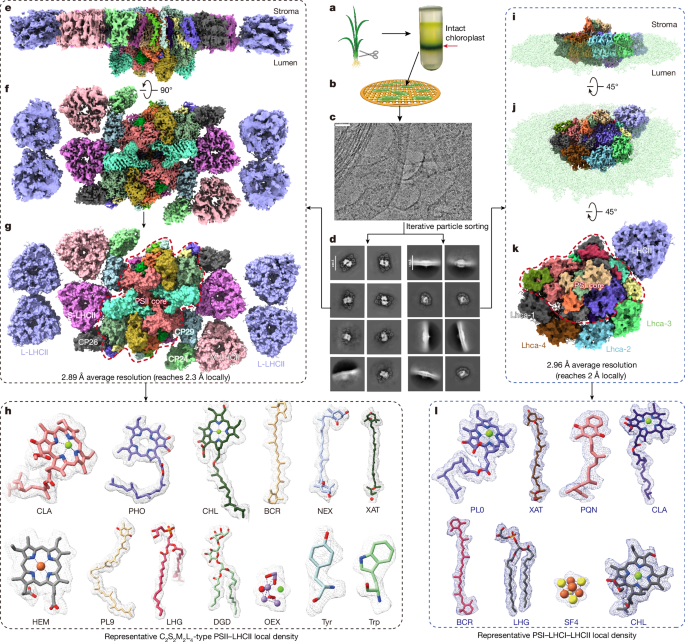
A study highlighted by Nature examines the in situ structure of plant photosystem supercomplexes, focusing on the Oryza sativa photosystem II-light harvesting complex II supercomplex. Using cryo-EM, the researchers mapped the assembly in its native membrane rather than relying only on purified material.
That approach matters because it preserves parts of the system that can be lost during preparation. According to the description, the native membrane view retains physiologically relevant proteins and lipids, giving a more complete picture of plant photosystem architecture as it exists in living cells.
The work adds structural detail to the study of light harvesting in oxygenic photosynthesis. By looking at the intact organization of photosystem II together with its associated light-harvesting complex, the research helps clarify how these components are arranged within the membrane environment.
More broadly, the findings point to the value of studying membrane protein complexes in place. For plant photosynthesis research, an in situ cryo-EM structure of the rice supercomplex offers a closer look at the full architecture and the molecular context that supports its function.