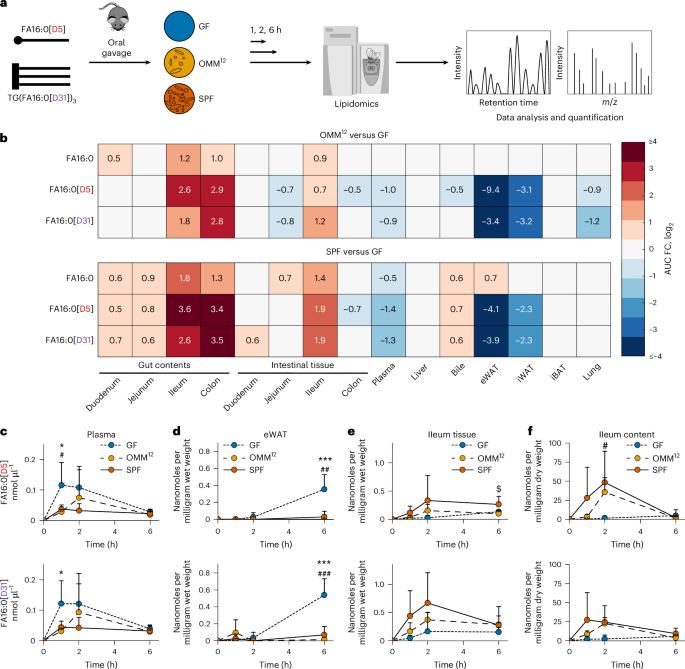
A new Nature study reports that gut microbiota can restrict intestinal lipid uptake in mice. By examining mice with different gut microbial states, the researchers linked the presence of microbes to changes in how the intestine handles fats.
The work used lipidomics and proteomics to track molecular differences associated with microbial colonization. The main finding points to an important role for bile phosphatidylcholine metabolism, suggesting that gut microbes can alter bile composition in ways that limit lipid absorption.
According to the study description, this effect is tied to activation of Myd88 signalling and the degradation of phosphatidylcholine in bile. Together, those changes appear to form a mechanism through which gut microbes reduce the amount of lipid taken up through the intestine.
Because the research was carried out in mice, the findings mainly provide a mechanistic model for future microbiome and metabolism studies. Even so, the results add to growing evidence that gut microbes, immune signalling pathways and bile chemistry are closely connected in the regulation of dietary fat absorption.





