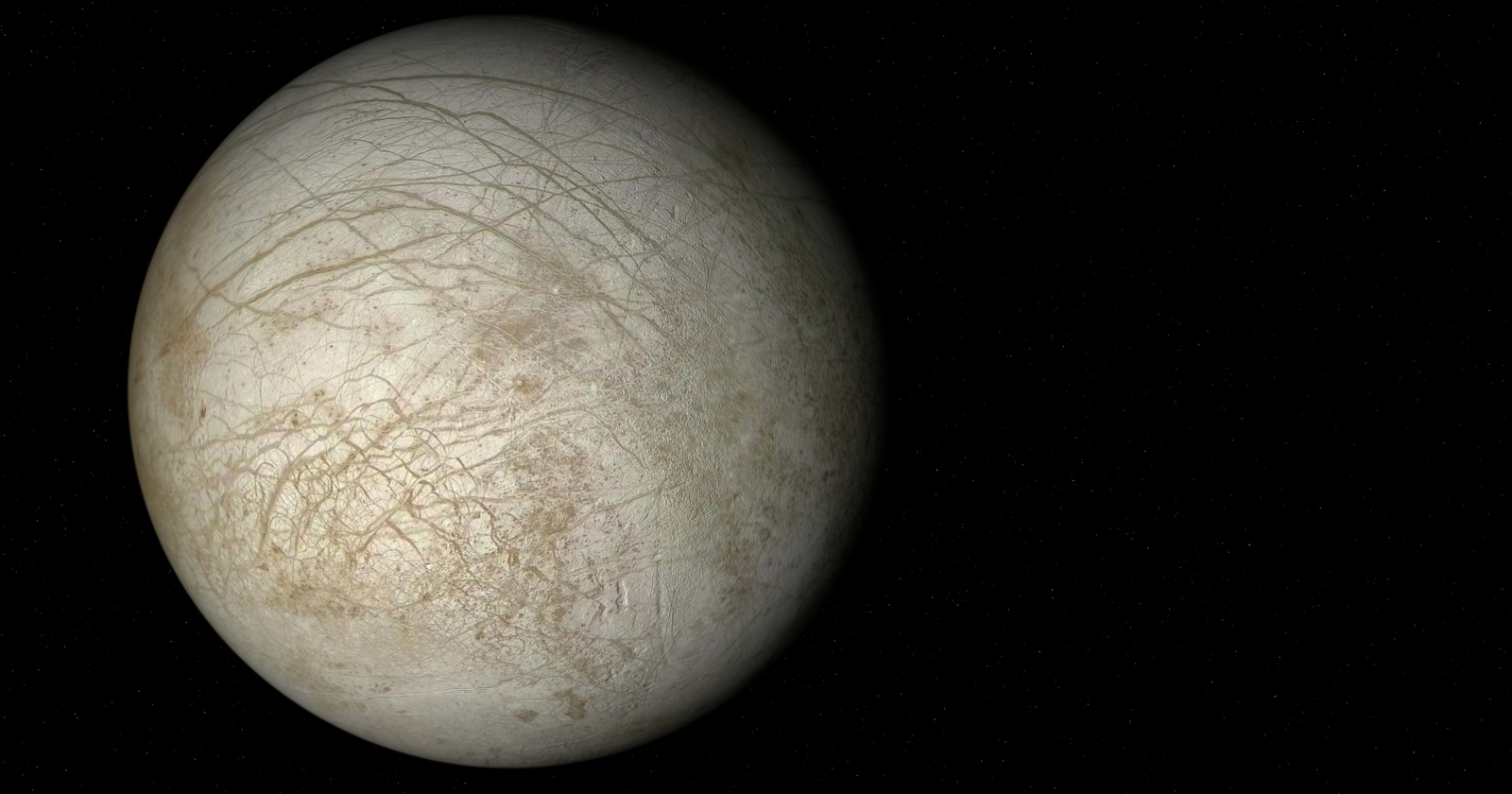
Europa, one of Jupiter's moons, is smaller than Earth's Moon, yet scientists think it may contain more liquid water than all of Earth's oceans combined. The idea sounds counterintuitive at first, but it becomes easier to understand when Europa is pictured not as a surface-ocean world like Earth, but as an icy body with a vast ocean locked underneath its frozen outer shell.
What makes Europa especially remarkable is that this buried ocean is not thought to stay liquid because of sunlight. Far from the Sun, Europa receives far less solar warmth than Earth does. Instead, the main source of heat is believed to come from Jupiter itself. The giant planet's intense gravity constantly pulls and squeezes Europa, flexing the moon's interior over and over again.
That slow but relentless gravitational kneading creates internal heat, a process often described as tidal heating. Over long periods, that energy can keep water below the ice from freezing solid. In simple terms, Europa may remain an ocean world because Jupiter's gravity acts like a steady engine beneath the moon's frozen surface.
The result is one of the most intriguing environments in the solar system: a small moon with an enormous hidden ocean, sustained by forces very different from those that shape Earth's seas. Europa stands out because its water may be both abundant and protected beneath ice, making it a compelling target for scientists studying how oceans can exist in the deep cold of space.