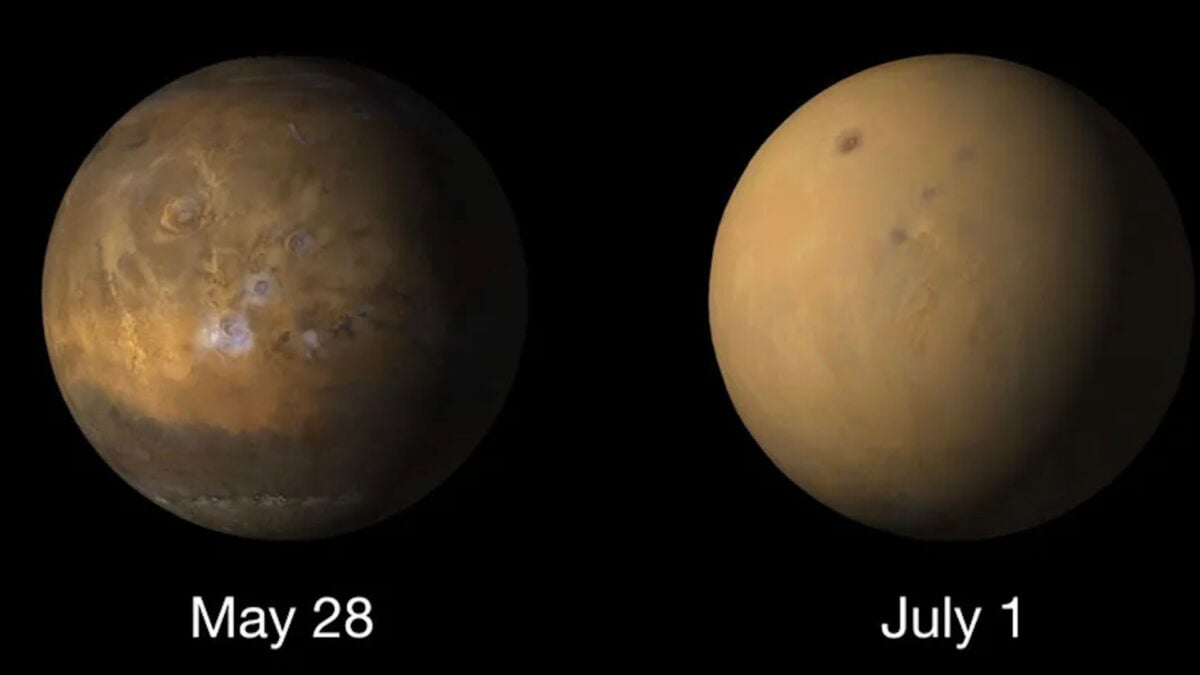
Scientists studying Mars have identified an unexpected danger for exploration: solar storms and dust storms may work together to sharply increase heat on the planet. According to the report, astronomers found evidence that this combined effect can raise temperatures by as much as 90 degrees Fahrenheit, or 50 degrees Celsius.
The finding adds a new layer to the already difficult challenge of operating on Mars. Dust storms have long been known as a serious threat, especially for robotic missions that depend on sunlight and stable environmental conditions. The new research suggests that solar activity can amplify those problems rather than acting as a separate hazard.
The risk is especially notable in light of NASA’s Opportunity rover, which stopped communicating with Earth on June 10, 2018 after being engulfed by a massive Martian dust storm. It took seven months before the agency confirmed the rover was lost, and the mission became one of the clearest examples of how destructive Mars weather can be.
If solar storms and dust storms can intensify conditions together, future Mars missions may need to plan for more than dust alone. The results point to a more complex Martian environment, one that could affect spacecraft operations and become an important factor in preparations for longer-term exploration.





