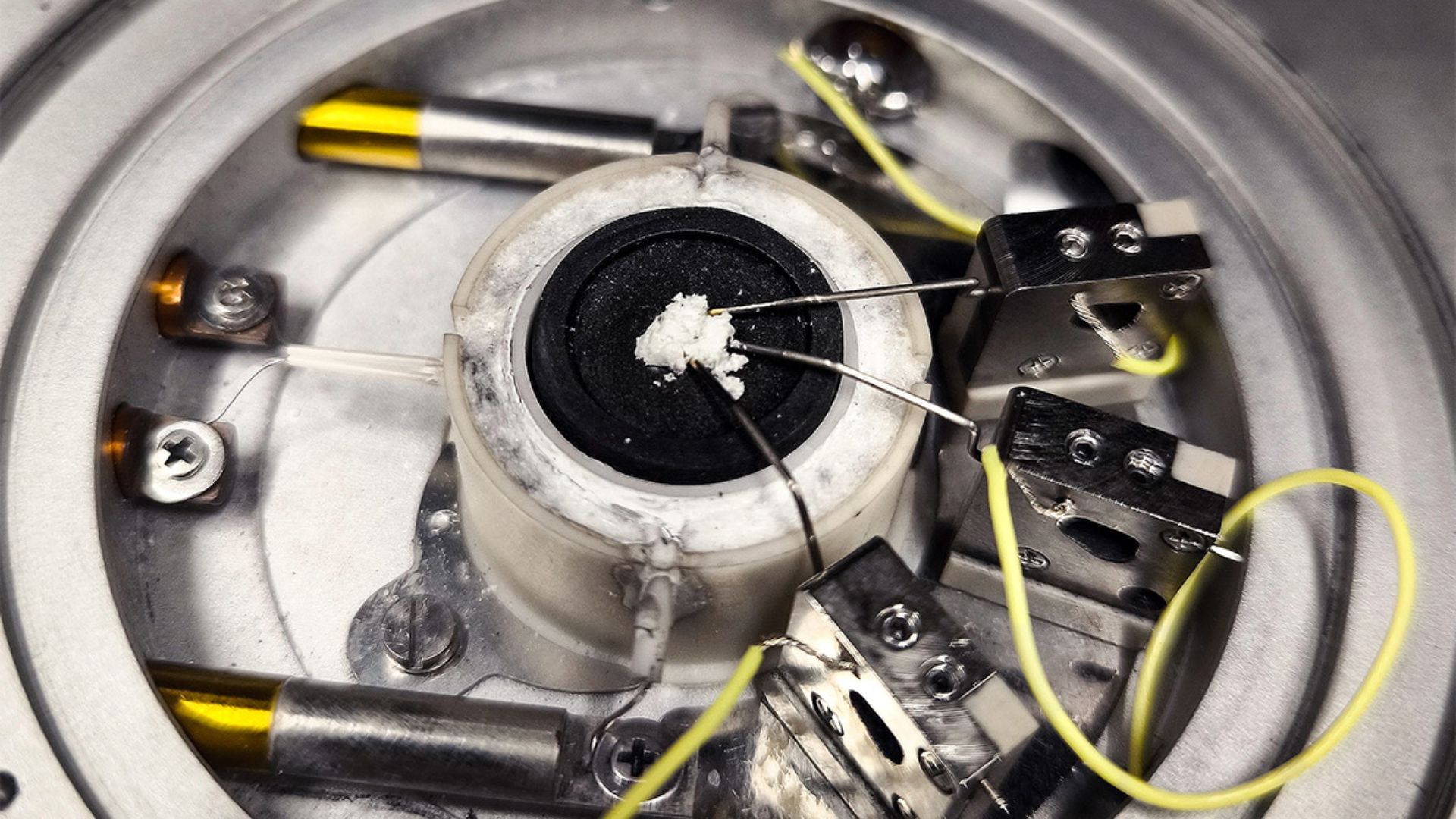
Scientists have directly watched carbon dioxide change into solid carbon inside molten salt heated to 500°C (932°F), offering a clearer view of a process that could help make graphite for electric-vehicle battery components. The work, reported by a team that included researchers from Lawrence Berkeley National Laboratory, focuses on molten-salt electrolysis as a way to transform CO2 into a useful material.
According to the report, the real-time footage revealed how carbon dioxide moves through the high-temperature salt environment and ends up as solid carbon. That matters because seeing the conversion happen step by step can help researchers understand the underlying chemistry and improve how efficiently the process works.
The result is notable because graphite is an important battery material, and producing it from captured carbon dioxide could link emissions reduction with advanced manufacturing. Instead of treating CO2 only as a waste gas, the method points to a route for turning it into a solid product with industrial value.
While the trimmed report does not outline commercialization plans, the study highlights the broader promise of molten-salt electrolysis for carbon conversion. By showing carbon dioxide turning into solid graphite-like material in real time, the research adds evidence that high-temperature electrochemical systems may support future battery supply chains and carbon-use technologies.





