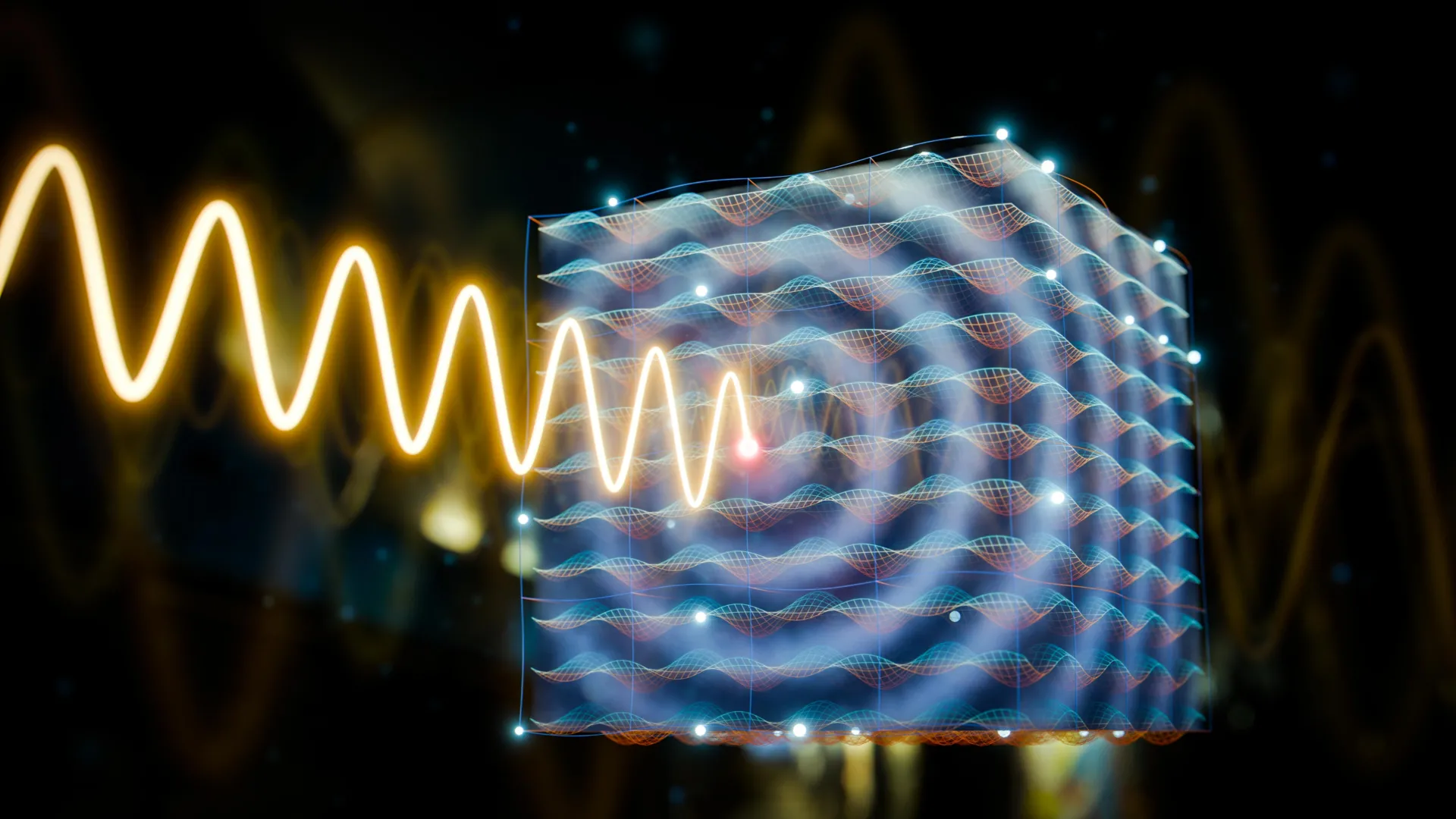
Researchers have reported the first experimental all-optical photonic time crystal, a new type of material engineered to change how it interacts with light rapidly and repeatedly over time. The work marks a notable step in controlling light in ways that conventional optical materials cannot.
According to the report, the team used the approach to alter the behavior of terahertz light at extremely high speeds. Terahertz waves sit between microwaves and infrared light on the spectrum, and they are already of strong interest for imaging, communications and sensing. A material that can dynamically reshape those waves could give scientists a much more precise tool for steering and processing them.
The idea behind a photonic time crystal is that its optical properties do not stay fixed. Instead, they vary in time, creating new ways for light to be amplified, redirected or otherwise modified. Demonstrating an all-optical version suggests that light itself can drive these changes, which may allow faster and more flexible control than other methods.
The researchers say the advance could help open paths toward ultrafast computing, smarter communication systems and improved imaging technologies. While the work is still at the research stage, the result points to a new era in time-based light control and expands the possibilities for future photonic devices.





