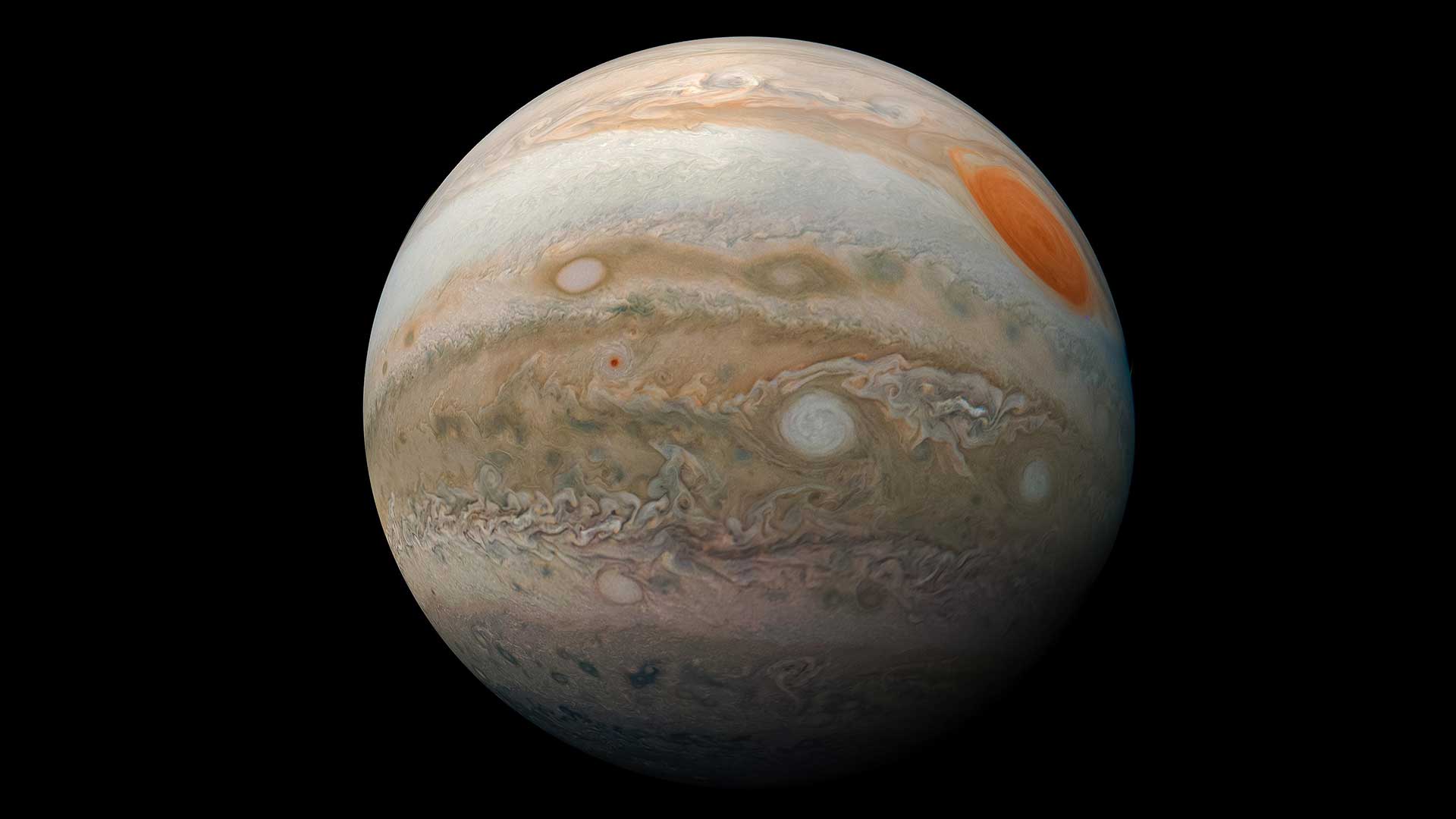
Jupiter may look as if it has a clear outer surface, with bands, clouds and a sharply defined edge, but that appearance is misleading. Unlike rocky worlds such as Earth or Mars, the giant planet does not offer a solid ground to touch down on. What seems like a surface is really the top of a vast atmosphere.
As a probe moved deeper into Jupiter, it would not hit a crust or ocean floor. Instead, it would pass through hydrogen that becomes denser and more compressed with depth. The planet changes gradually rather than presenting a single boundary where sky ends and land begins.
Far below the visible clouds, the pressure becomes so intense that hydrogen no longer behaves like an ordinary gas. In those deeper regions, it shifts into an exotic state that can conduct electricity like a metal. That makes Jupiter very different from planets with recognizable terrain.
For that reason, the idea of landing on Jupiter does not really apply. A descending spacecraft would face crushing pressure and extreme conditions long before it reached anything resembling a solid surface, eventually being destroyed and absorbed into the planet’s interior.