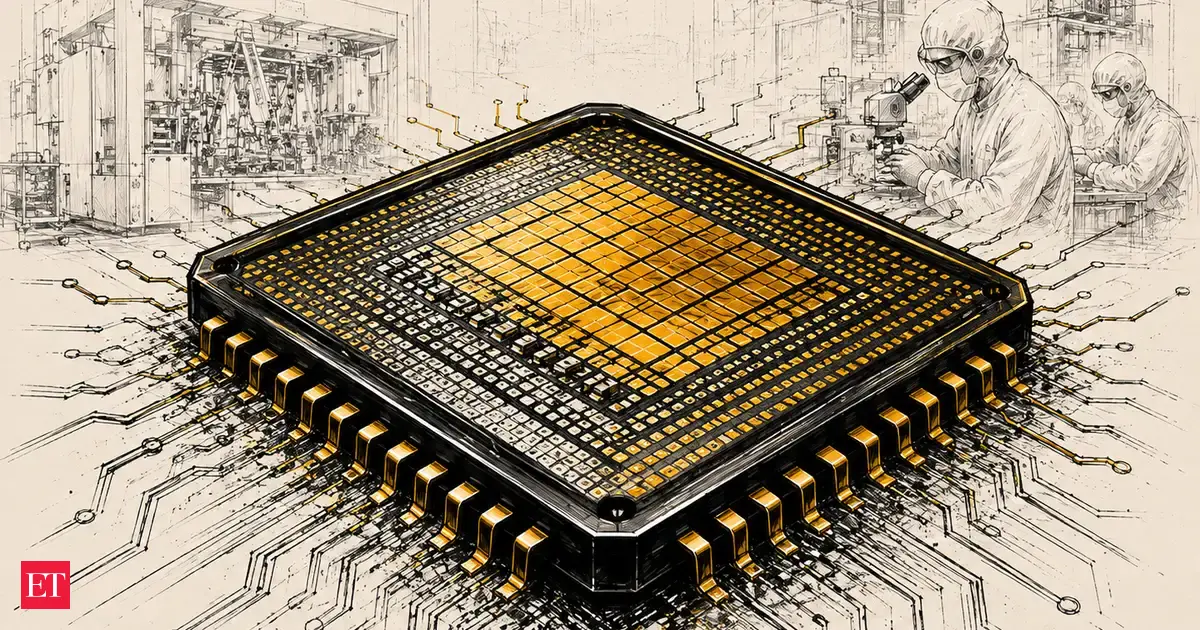
India and China are moving in very different directions in the semiconductor race. China is working to reduce its dependence on overseas technology by developing domestic lithography machines, while India is trying to secure a place in the global chip industry by building closer links with established international players such as ASML through Tata Electronics.
The comparison between the two countries is not straightforward. China already has a broad semiconductor base that spans several parts of the industry, including chip design, fabrication and packaging. That means its current push is less about entering the sector and more about reshaping it on its own terms, especially in critical equipment and production capabilities.
India, by contrast, is at an earlier stage and appears to be following a more partnership-driven route. Rather than attempting to recreate the entire semiconductor stack at once, its approach is centered on integrating with the existing global supply chain. The emphasis on stronger ties with ASML through Tata Electronics signals a strategy focused on access, collaboration and gradual capability building.
These differing paths highlight two separate playbooks for semiconductor development. China is trying to localize key technologies and strengthen self-reliance, while India is positioning itself as a new manufacturing and supply-chain destination by working with global leaders. The result is not a direct contest today, but two distinct models for how Asian economies are trying to secure a larger role in the chip industry.