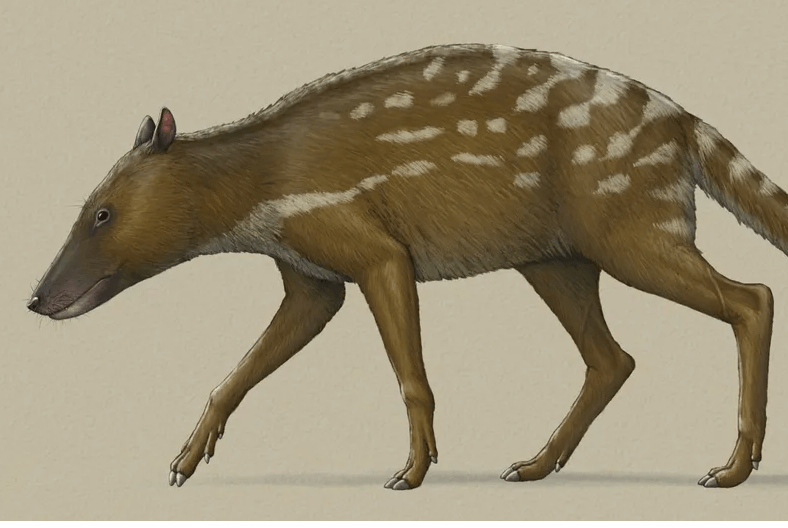
The animal may have looked a bit like a fox at first glance, but it was not a fox and not even part of the dog family. Instead, it represents an early stage in whale evolution, showing how the ancestors of modern whales were once small land mammals with fur and four legs.
That makes it a striking contrast with whales alive today. Modern species are defined by flippers, blowholes and fully aquatic bodies, yet their distant relatives were much smaller and walked on land. According to the description, this ancestor was no bigger than a fox and has also been compared to a pig-like mammal in the broader whale family tree.
The comparison underlines one of evolution’s most dramatic transformations: the path from a compact, furry animal on land to enormous ocean giants such as the blue whale. Rather than resembling the sleek marine mammals we know now, these early forms were transitional creatures that help connect life on land with life in the sea.
Stories like this highlight why whale evolution remains so compelling to scientists and wildlife readers alike. A seemingly ordinary, odd-looking mammal can turn out to be a crucial stepping stone in understanding how some of the biggest animals on Earth originated from much smaller terrestrial ancestors.





