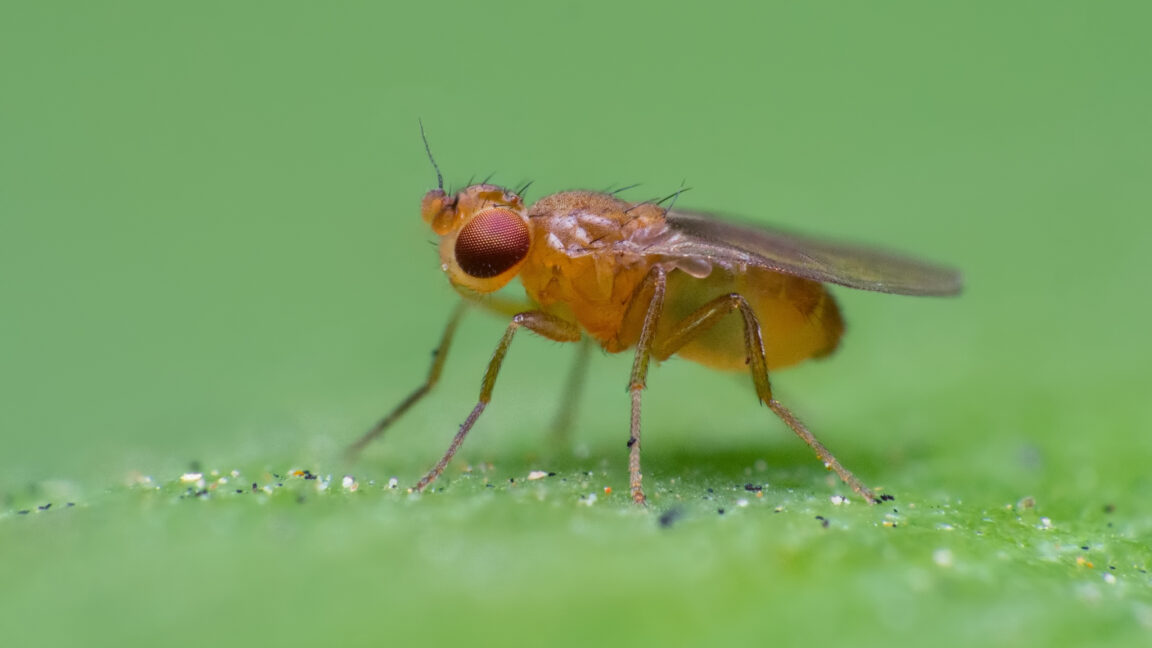
Fruit flies can find a smell source even when the odor does not spread in a smooth, continuous cloud. Instead, scent in moving air can break into thin, shifting ribbons that appear and disappear. The report highlights how flies still manage to pursue those faint signals and keep moving toward where the odor began.
That kind of tracking is difficult because turbulent air constantly disrupts the path of a smell. A fly may detect an odor for a moment, lose it, and then pick it up again somewhere else. To stay on course, it appears to rely on more than simple detection, combining smell with a strong sense of direction.
Memory also seems to matter. When the scent briefly vanishes, the insect still has to continue searching in a useful way rather than starting over each time. This suggests that fruit flies can hold onto recent information about where the odor was and use it to guide the next part of the chase.
The findings point to a more sophisticated form of odor navigation than a basic reaction to scent alone. By linking smell, orientation, and short-term memory, fruit flies are able to follow unstable odor patterns through the air and get closer to their target.