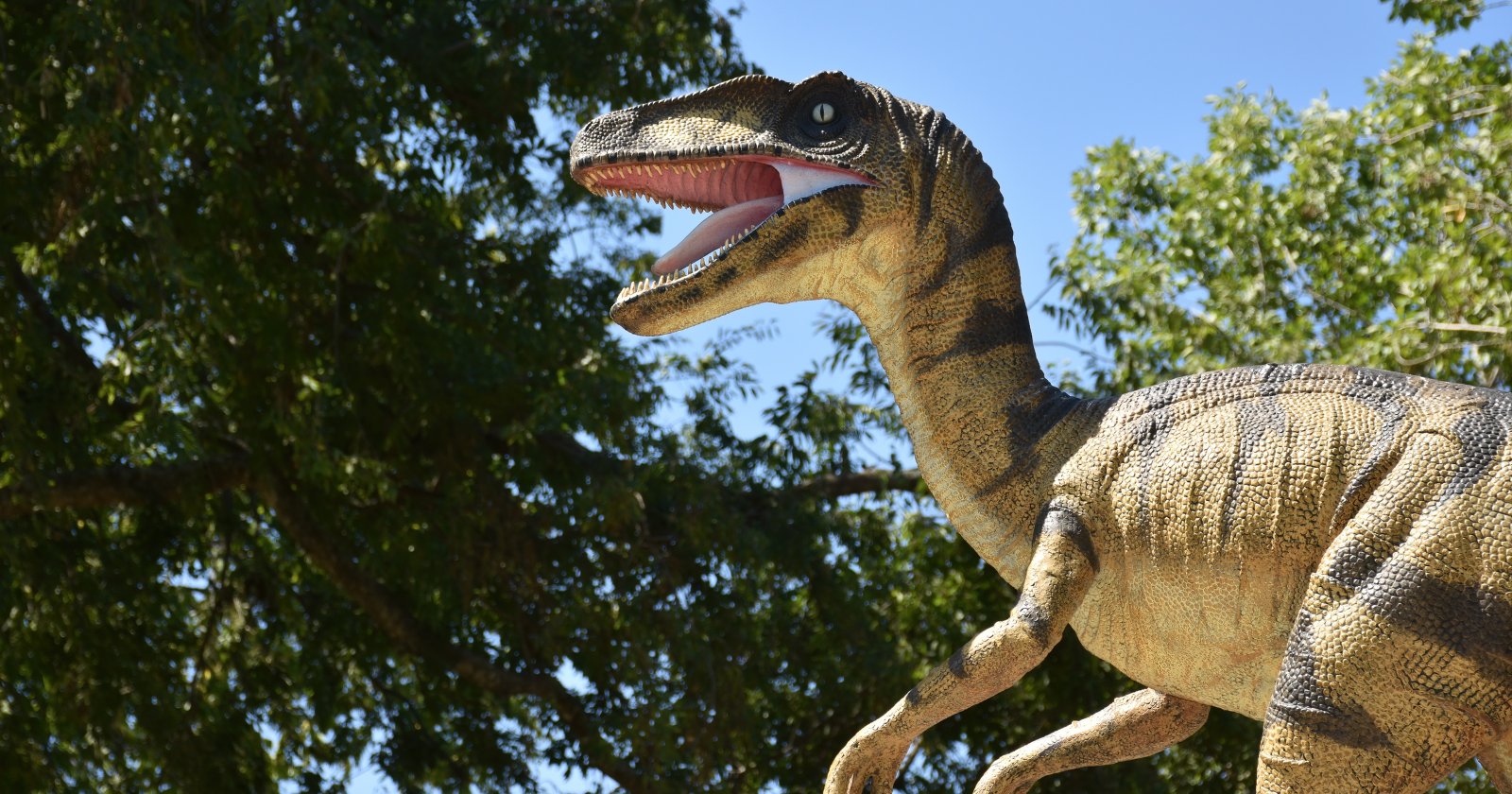
For many viewers, the most memorable Jurassic Park moment is the kitchen sequence, where a towering velociraptor prowls between steel counters. That version of the animal became one of cinema's defining predators: tall, scaly and terrifyingly human-sized.
According to the fossil-based picture outlined here, the real Velociraptor was far smaller. Instead of standing close to two metres tall, it was roughly knee-high, weighed about 15 kilos and was closer in size to a turkey than a movie monster.
Its appearance was also very different from the reptilian hunter seen on screen. Paleontological evidence indicates the animal was covered in feathers, and the title highlights visible quill anchor points on a fossil forearm as a key clue. That makes the contrast especially striking: the popular image is a scaly giant, while the scientific one is a compact feathered predator.
The comparison underscores a broader point about dinosaurs in popular culture. Blockbuster imagery can linger for decades, even as research reshapes what these animals looked like and how they should be understood. In the case of Velociraptor, the gap between Hollywood fantasy and fossil evidence remains especially wide.





