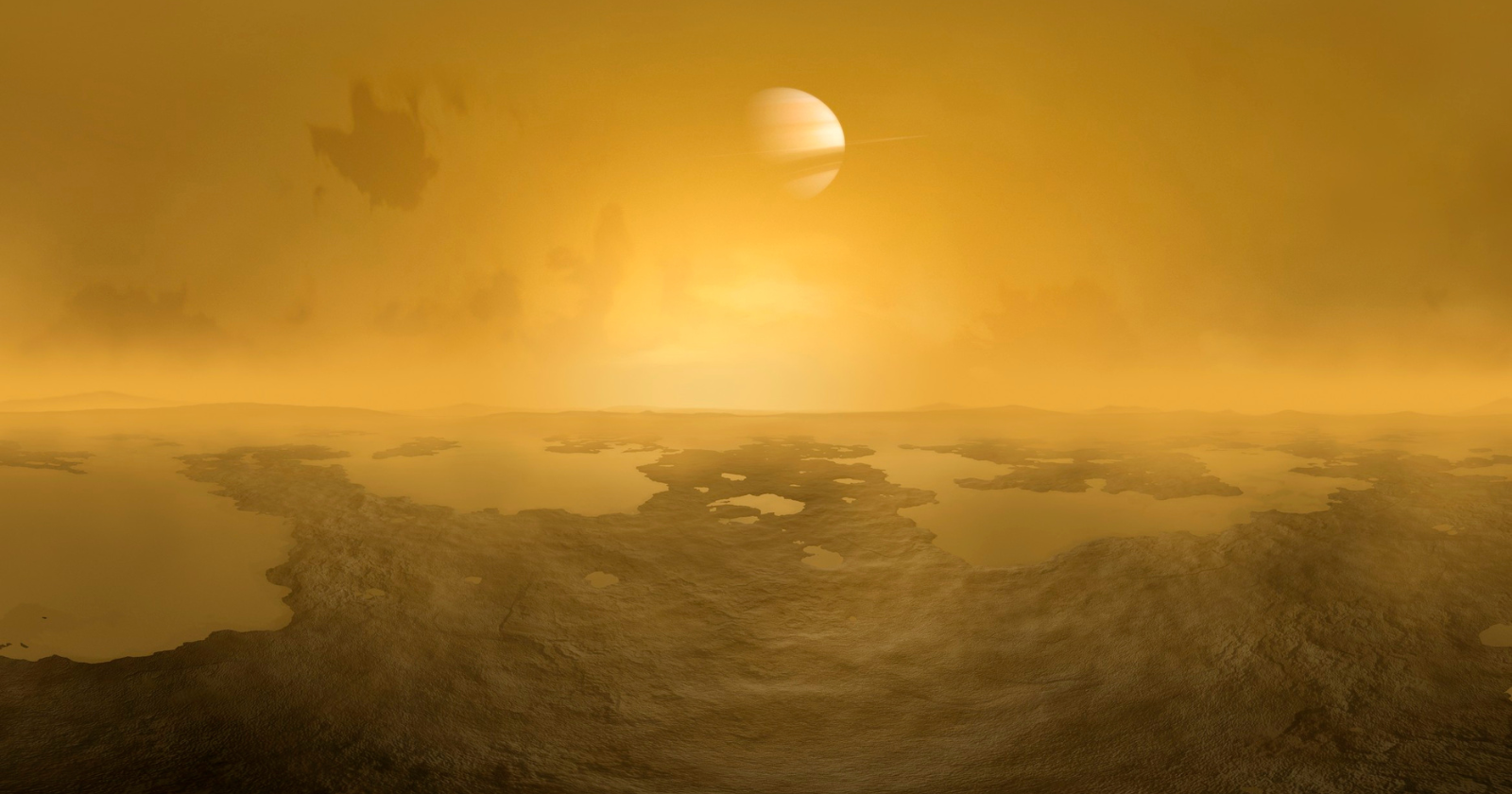
Saturn’s moon Titan is drawing new attention because its river systems do not behave the way rivers usually do on Earth. A 2025 Brown University study reported that only about 1.3% of Titan’s liquid methane rivers appear to build deltas where they enter larger bodies of liquid, even though deltas are a common outcome for rivers on our planet.
The finding is especially striking because Titan has large, active drainage networks. One example highlighted in coverage is a roughly 400-kilometre river system near Titan’s north pole that flows into a sea larger than Lake Superior. The setting sounds familiar until the chemistry changes: on Titan, the flowing liquid is methane rather than water.
That mismatch between Earth-like landscapes and very un-Earth-like materials is at the center of the mystery. On Earth, rivers typically slow down as they meet a lake, sea, or ocean, dropping sediment that gradually forms a delta. Titan’s rivers often seem to reach its seas without leaving those clear depositional features behind, suggesting that sediment movement, shoreline processes, or the behavior of methane liquids may work differently there.
Researchers do not yet know why Titan lacks deltas across so much of its river network. The result adds to Titan’s status as one of the most intriguing worlds in the solar system, because it shows that familiar geologic shapes can emerge under alien conditions while still following rules scientists do not fully understand.