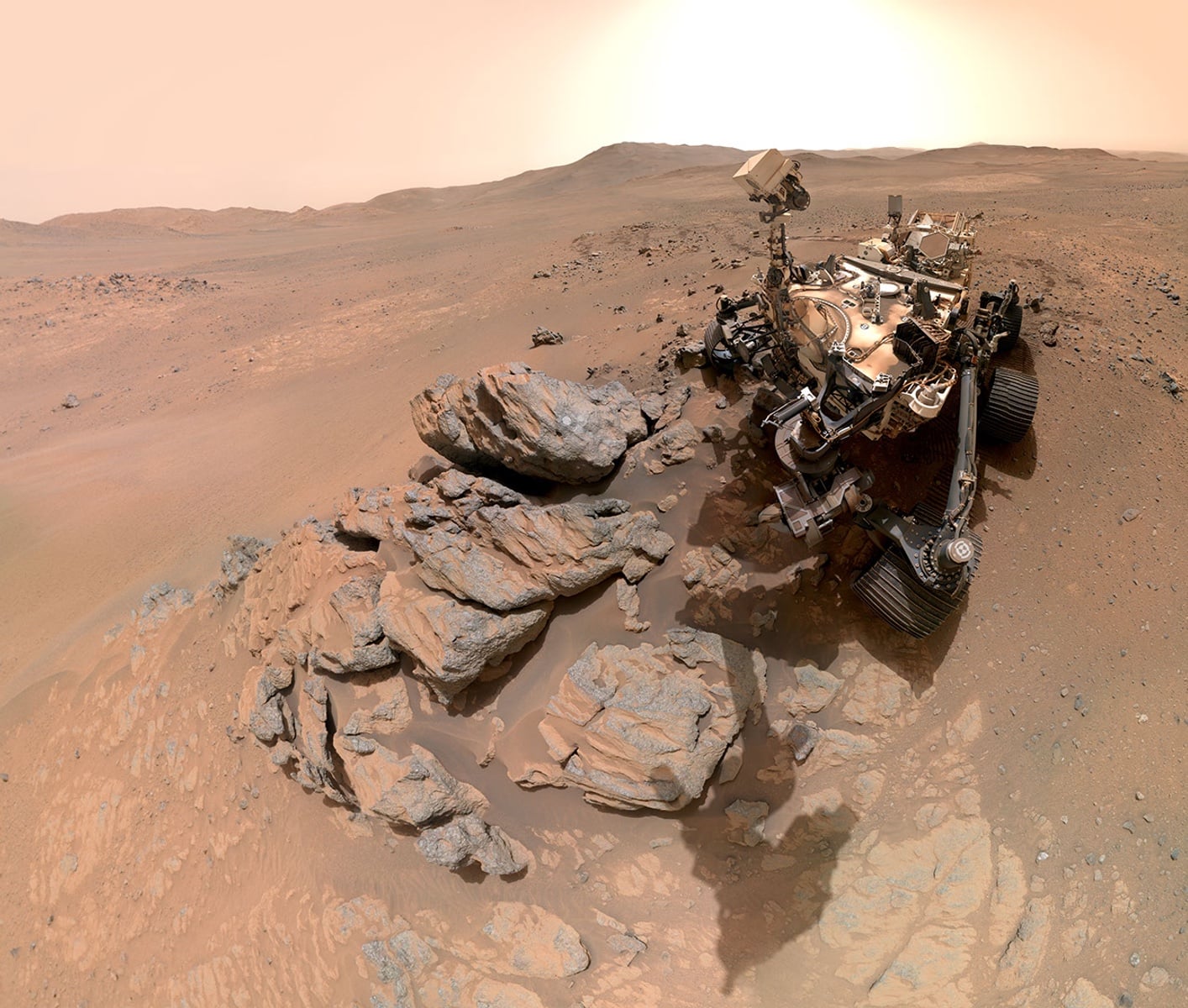
Mars can produce a temperature contrast that would be impossible on Earth. Near the equator at midday, dark ground in direct sunlight may warm to about 24 degrees Celsius, while the air higher up around a person’s head can still remain below freezing.
The striking split comes from the planet’s extremely thin atmosphere. Sunlight can heat the surface efficiently, especially darker soil, but the surrounding air does not trap or spread that warmth very well. As a result, the heat stays concentrated close to the ground instead of mixing upward.
That means two thermometers placed only a short distance apart on Mars could show dramatically different readings at the same moment. One touching the sunlit soil could register mild, spring-like warmth, while another at standing height would still reflect harsh cold.
The effect highlights how alien the Martian climate really is. On Earth, a much thicker atmosphere smooths out temperature differences over short distances, but on Mars the boundary between warmer surface conditions and freezing air can exist within the span of one person.