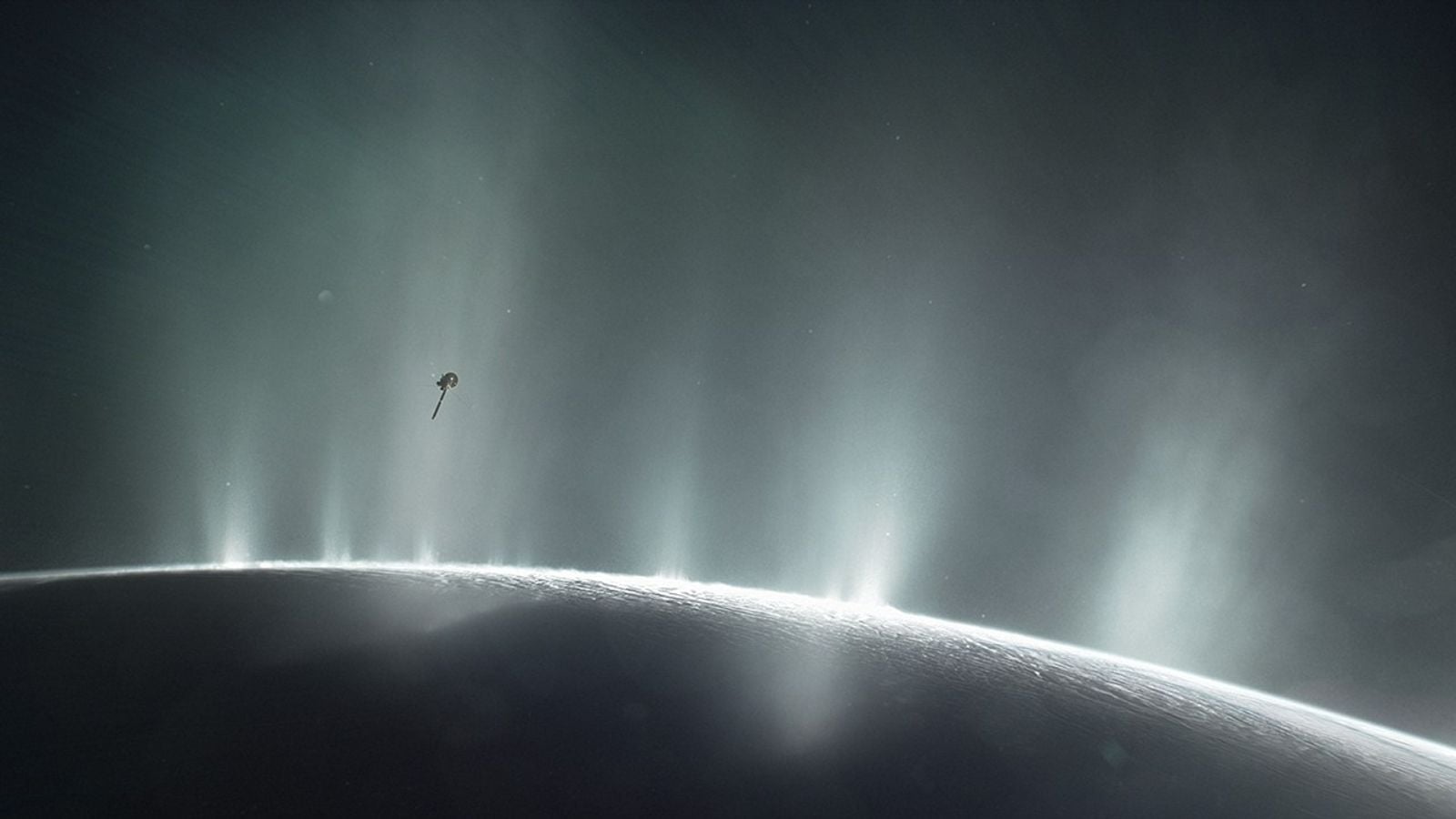
Enceladus, one of Saturn’s moons, stands out among ocean worlds because its salty sea is not completely sealed off beneath ice. While many icy moons may hide water under thick frozen shells, Enceladus also sends material from that buried ocean out into space in the form of a plume.
That makes the moon especially important for scientists searching for habitable environments beyond Earth. Instead of trying to land, drill through kilometres of ice, and reach liquid water directly, a spacecraft could collect samples simply by flying through the plume. In effect, Enceladus offers access to ocean material without the hardest part of the engineering challenge.
The idea is significant because hidden oceans are among the most promising places to look for the ingredients of life. If water from Enceladus is being blasted into space, researchers may be able to test what is in that ocean, including clues about its chemistry and whether it could support living systems.
For planetary science, Enceladus represents a shortcut that few other ocean worlds provide. Its ice-covered sea remains buried, but the moon’s natural eruptions may allow future missions to study an alien ocean in a much more direct way than previously possible.