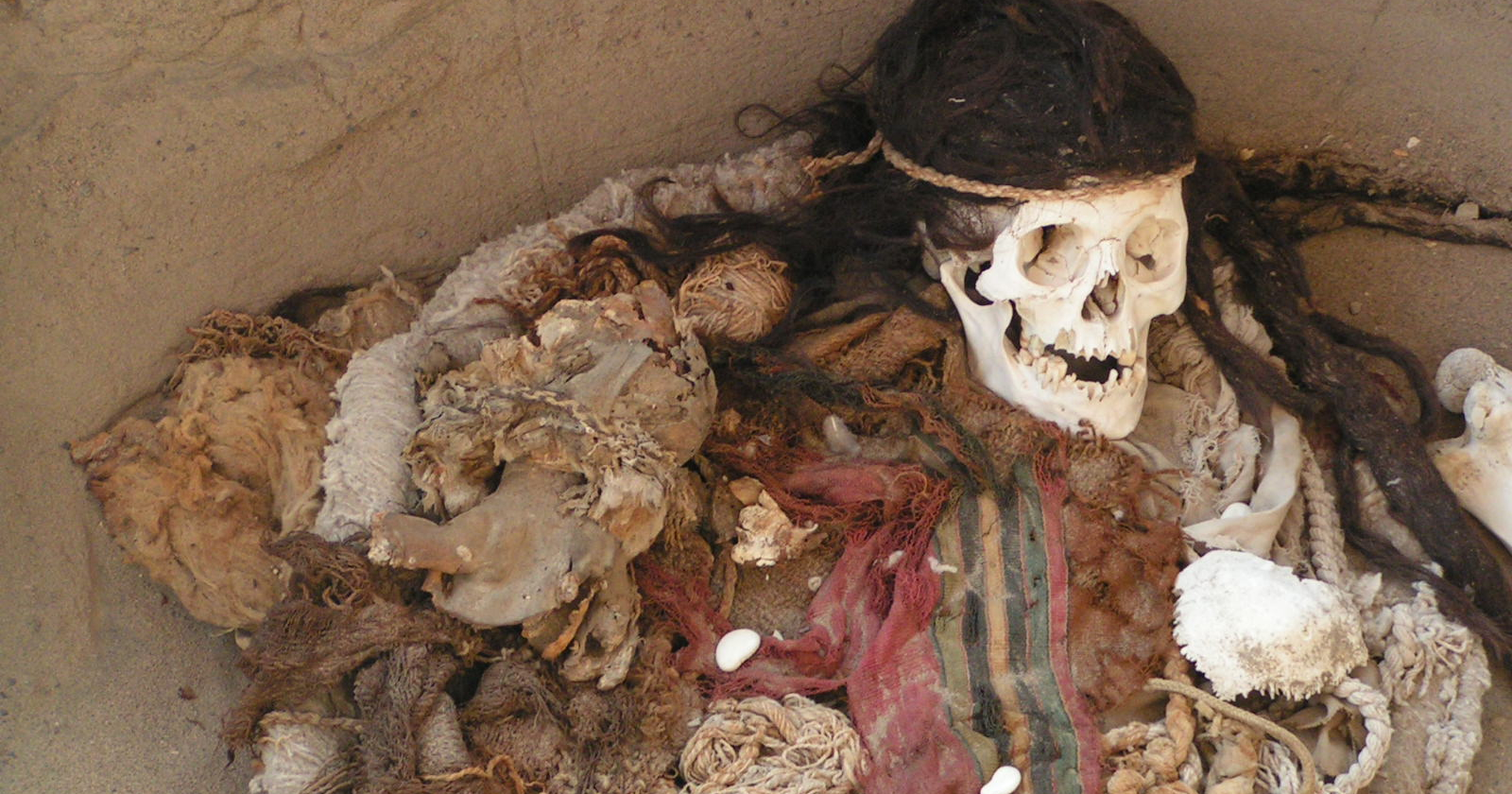
Ancient mummies found in western China stunned researchers because many seemed to look more European than East Asian. One striking example, buried in a boat-shaped coffin beneath the Taklamakan Desert, was preserved with eyelashes, flaxen hair, a white wool cloak, a felt hat and fur-lined boots still visible.
For years, those features encouraged the idea that these people were travelers or migrants who had come east from Europe. Their appearance seemed to fit that theory so well that it shaped how the discoveries were first understood.
DNA evidence, however, pointed in a very different direction. Genetic analysis suggested the mummies were not outsiders who had recently arrived from Europe, but a local population in western China. That contrast between physical appearance and ancestry was so sharp that even experts initially found the result hard to believe.
The findings underline how misleading appearances can be in archaeology, especially when dealing with ancient remains and cultural artifacts. In this case, genetics offered a more complex picture of the people who once lived around the Taklamakan Desert, showing that ancestry and outward traits do not always tell the same story.





