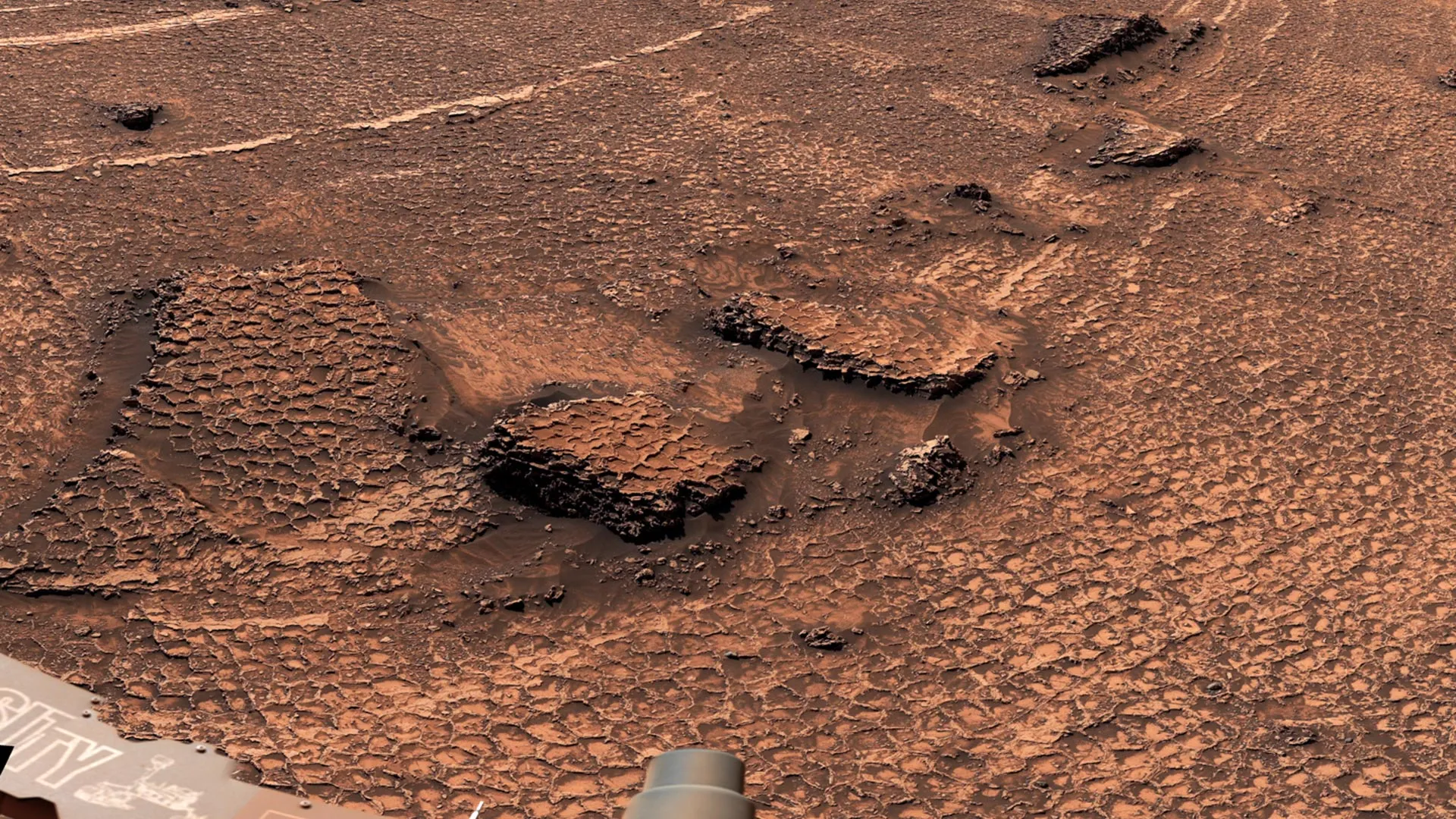
NASA’s Curiosity rover has reached an unusual stretch of Mars where the surface appears covered by a honeycomb-like network of tiny polygon fractures. The formations were spotted as the rover moved through a valley nicknamed Valle Grande, adding another striking landscape to the mission’s long-running exploration of the Red Planet.
According to the report, the ground is packed with small crack patterns only a few inches across, creating what looks like a broad “sea” of geometric shapes. The texture is not limited to the valley floor. It also seems to wrap around a nearby butte about 20 feet tall, making the scene even more distinctive.
Images returned by Curiosity show how widespread the pattern is in this part of the Martian terrain. Researchers are now likely focused on what process produced such a tightly repeated design, since the scale, distribution and placement of the fractures could offer clues about the area’s history.
While the exact explanation remains unclear from the early observations, the discovery highlights how Mars continues to reveal unexpected surface features even after years of rover exploration. For Curiosity, the honeycomb landscape in Valle Grande stands out as another scientifically intriguing stop on its climb through the valley.