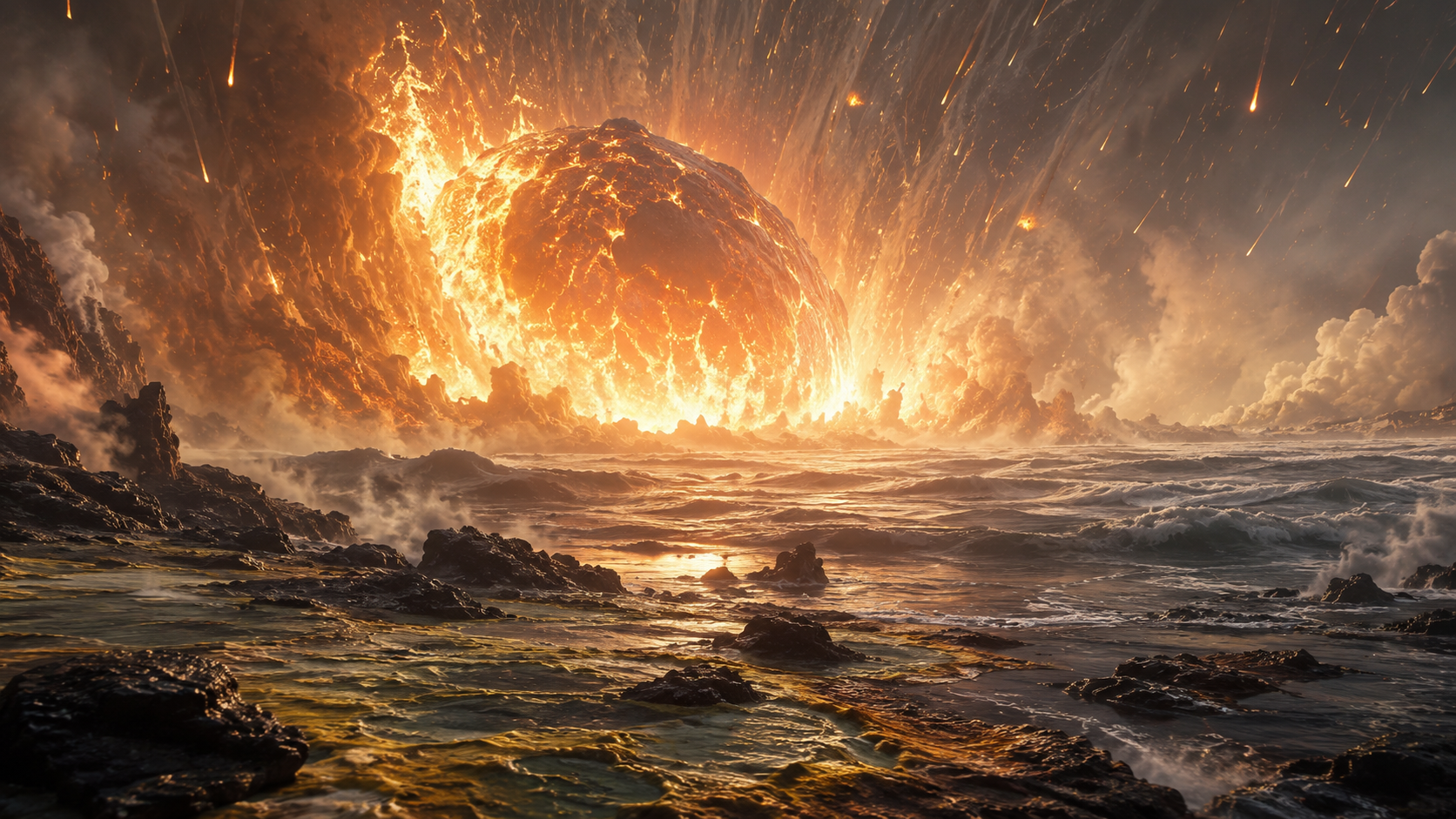
A massive space rock known as the S2 meteorite struck Earth about 3.26 billion years ago, in an event described as far larger than the impact tied to the extinction of the dinosaurs. According to the report, the object may have been 50 to 200 times more massive, making it one of the most extreme collisions in the planet’s early history.
The impact appears to have triggered a chain of severe environmental effects. The collision is said to have unleashed a tsunami, heated the oceans and darkened the planet, conditions that would have put enormous stress on early life and dramatically altered the surface environment.
Even so, the aftermath may not have been entirely destructive. Researchers suggest the S2 meteorite could also have delivered important materials, including iron and phosphorus, into Earth’s systems. Those nutrients may have created conditions that supported the recovery of microbial life after the immediate devastation.
That combination of catastrophe and renewal is why the event is being linked to the broader course of evolution on early Earth. Rather than acting only as a destructive force, the S2 impact may have reshaped habitats and redistributed key ingredients for life, influencing how some of the planet’s earliest organisms survived and adapted.