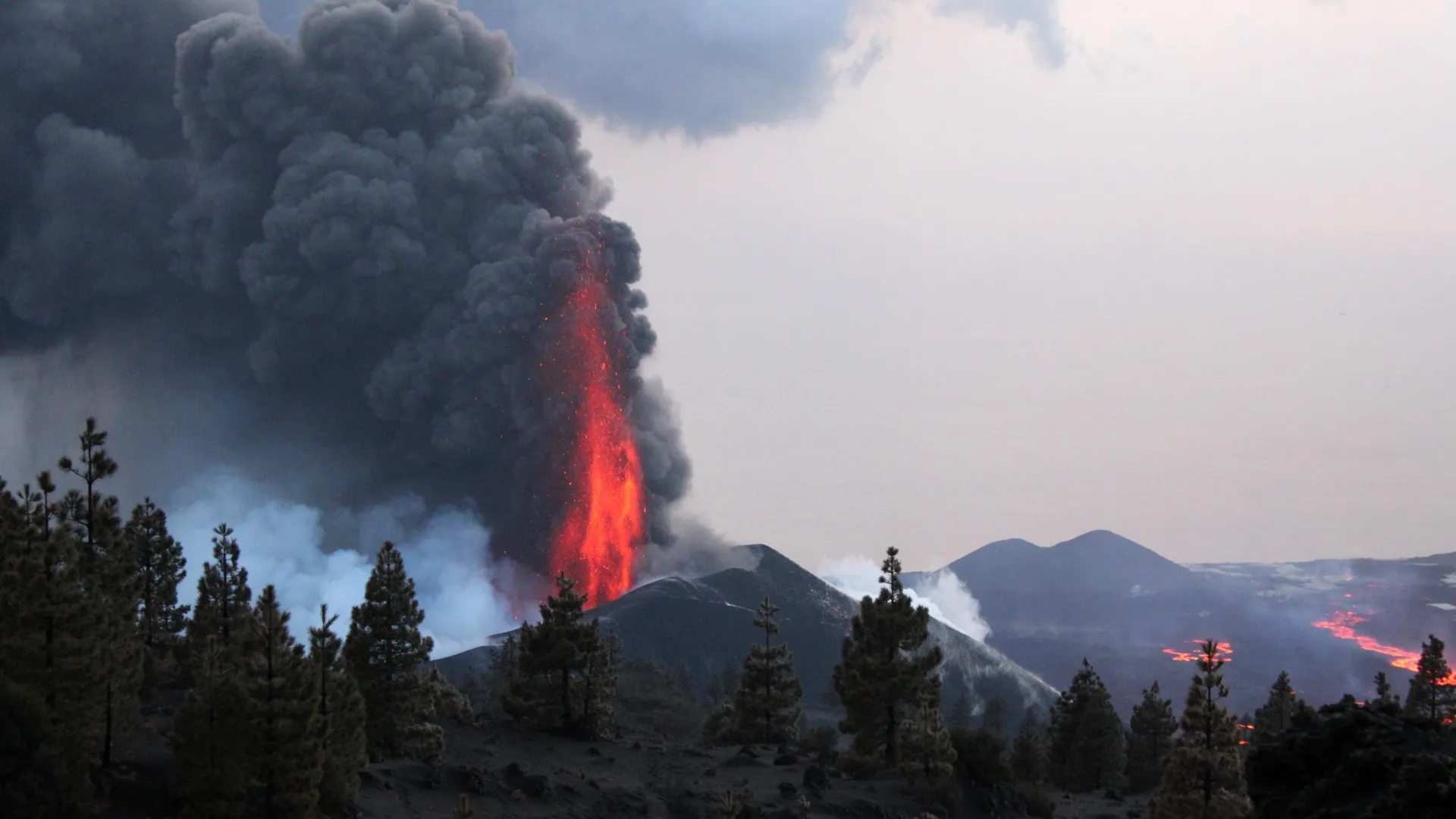
Scientists examining magma from the 2021 Tajogaite eruption on La Palma say extreme heat may play a bigger role in volcanic behavior than previously understood. Their work points to a heat-driven process that can reshape how an eruption develops and may help explain the rise of unusually tall lava fountains.
According to the research, superheated magma can dissolve the tiny crystal nuclei that normally help crystallization begin. If those early crystal-forming sites disappear, the magma may continue evolving in a different way, potentially changing how gas, pressure and molten rock interact during an eruption.
The study offers one possible answer to a long-standing question in volcanology: why volcanoes with broadly similar characteristics can erupt in very different ways. Rather than focusing only on a volcano's size, composition or location, the findings suggest that temperature extremes inside the magma itself may strongly influence the final style of an eruption.
By analyzing material from Tajogaite, the international team adds new evidence that subtle changes inside magma can have dramatic surface effects. The results highlight how overheating deep below ground could contribute to more intense and visually striking eruptive activity, including towering lava fountains.





