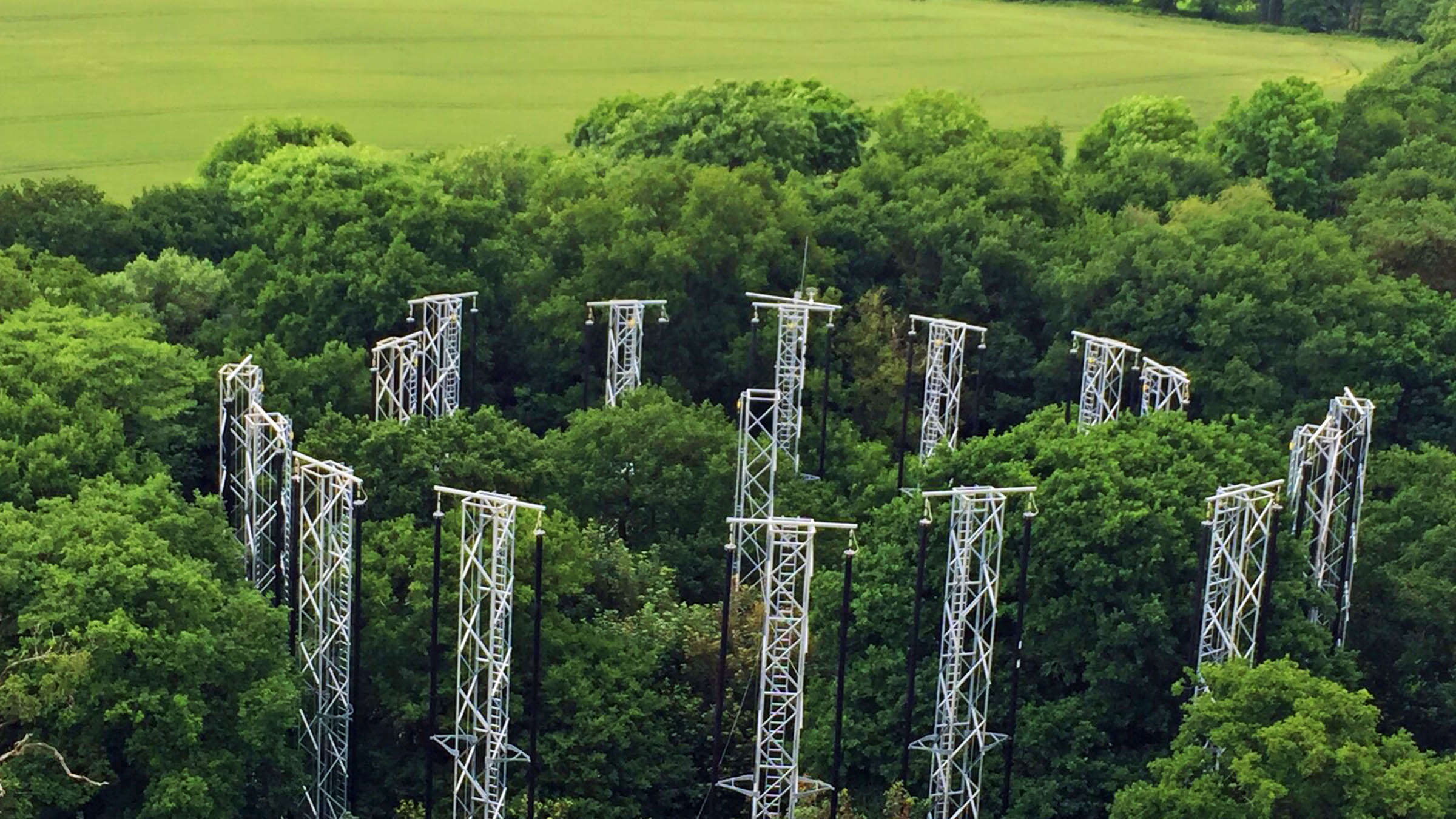
A long-running field experiment in Staffordshire, England, suggests oak trees may cope with rising carbon dioxide better than expected. Researchers exposed a stand of 180-year-old English oaks to extra CO2 during daylight hours from spring budburst to autumn leaf fall, creating a real-world test of how mature trees respond to future atmospheric conditions.
The key finding from the six-year study is that the oaks appear able to find more nitrogen as carbon dioxide levels rise. That matters because nitrogen is one of the nutrients that can limit plant growth. In many climate studies, extra CO2 can only boost growth if trees can also secure enough nutrients from their environment.
The result points to a possible advantage for oak trees in a higher-CO2 world: they may be more flexible in obtaining the nitrogen needed to support their leaves and overall activity. That makes the finding notable, because nutrient shortages are often seen as a major constraint on how much forests can benefit from additional carbon dioxide.
Even so, the study centers on one oak woodland in England, so the findings do not automatically apply to every forest or tree species. Still, the Staffordshire experiment offers valuable evidence from mature trees in natural conditions, helping scientists better understand how old-growth woodlands may respond as atmospheric CO2 continues to increase.