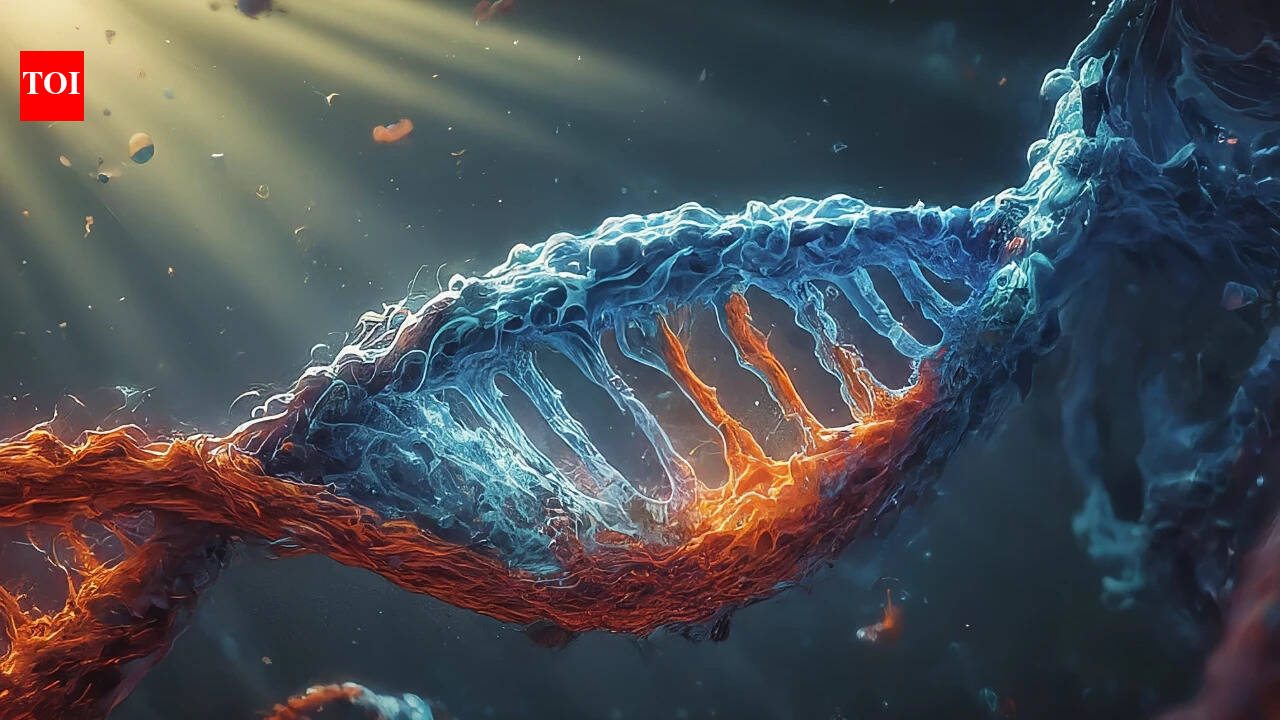
Scientists have identified a new mechanism that helps protect DNA during cell division, a process in which one cell splits into two daughter cells. The discovery focuses on what happens when chromosomes do not separate completely, a mistake that can leave thin DNA connections, known as DNA bridges, between the newly formed cells.
Under normal conditions, a dividing cell must copy its genetic material and distribute it accurately. When that separation is incomplete, these lingering DNA bridges can create a vulnerable situation for the genome. The newly reported mechanism appears to help shield that DNA, reducing the risk of damage during a critical stage of division.
The finding adds to researchers’ understanding of how cells manage errors that arise while chromosomes are being sorted. Instead of viewing cell division as a perfectly smooth process, the work highlights that cells may have built-in ways to respond when DNA remains physically linked between daughter cells.
By revealing how DNA can be protected even when division does not proceed cleanly, the study offers a clearer picture of chromosome behavior and genome maintenance. That makes the research an important step in understanding the safeguards cells use to preserve genetic information.