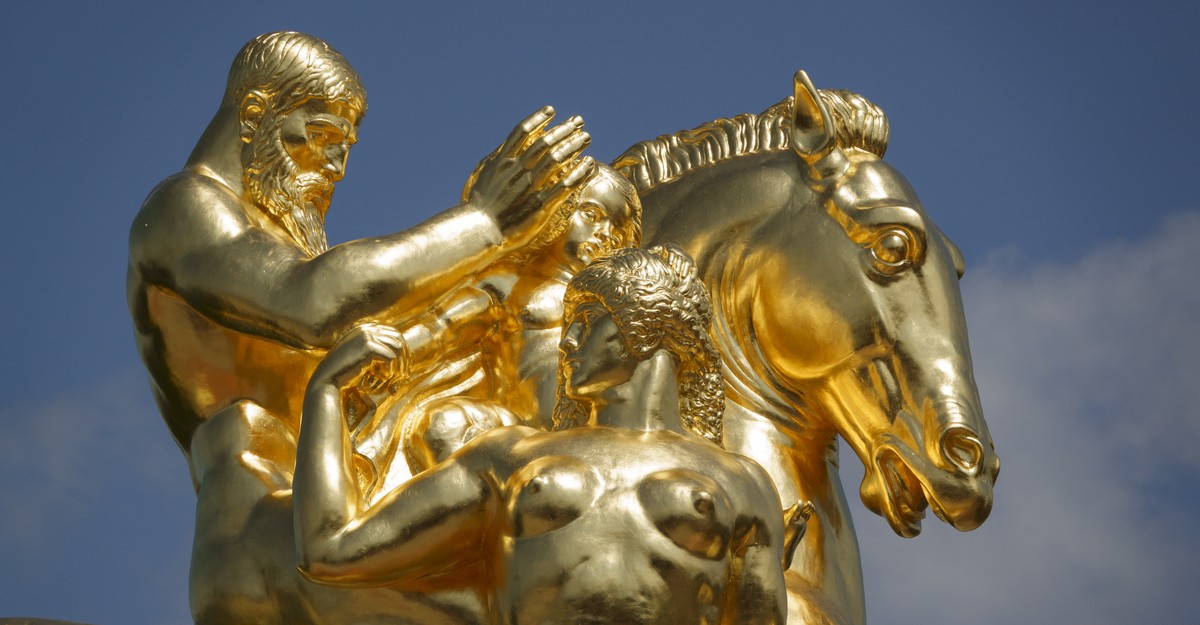
A new debate over President Donald Trump’s taste for gold is focusing on public spending in Washington, where freshly gilded twin statues near the Lincoln Memorial have become a vivid symbol of that style. The statues are described as unmistakably gold, with a bright finish that stands out sharply in the historic setting.
The broader argument is not only about appearance but also about cost. Critics say taxpayers are effectively covering the price of ornamental choices that reflect Trump’s preference for lavish, gilded design. In that sense, the issue has become part of a larger conversation about how presidential aesthetics influence public spaces and public budgets.
The use of 23.75-karat gilding gives the memorial statues an especially dramatic look, turning them into a visible example of what some observers see as a modern version of a "gilded age" approach to government presentation. Supporters may view such upgrades as bold or grand, while opponents see them as excessive and distracting.
By centering on the gold-covered statues near the Lincoln Memorial, the controversy highlights a wider political question: when symbolic design choices are made for prominent civic landmarks, where should the line be drawn between beautification, branding, and responsible use of taxpayer money?