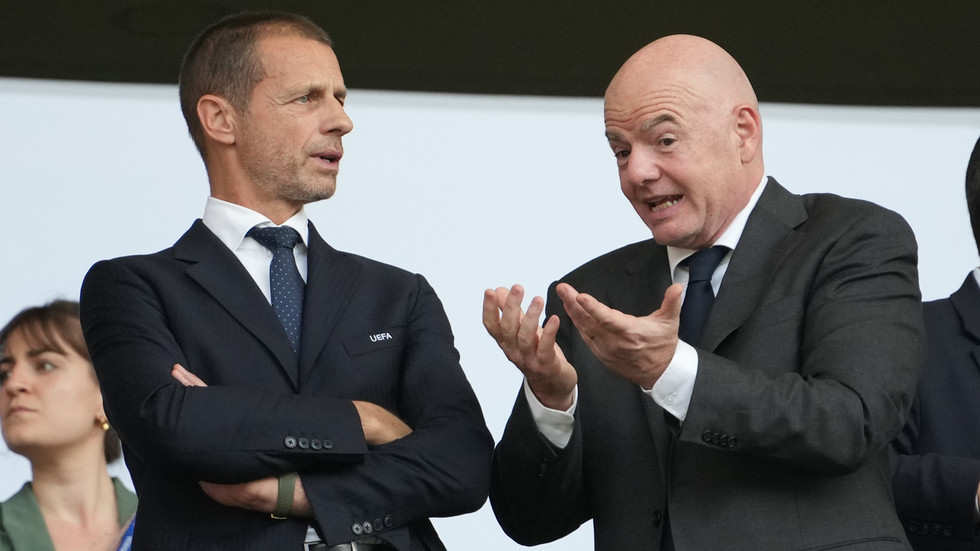
An opinion article from RT presents UEFA’s clash with FIFA over a proposed World Cup investment plan as a much bigger struggle than a simple policy disagreement. The piece argues that European football authorities pushed back not only over finances, but also over who controls the game’s future and who benefits most from its biggest tournaments.
According to the article, the boycott of FIFA’s proposal reflected competing interests around money and power inside football’s governing structure. It suggests UEFA wanted to preserve its influence over the sport’s financial model, while presenting its position as a defense of football’s wider interests.
The commentary also links the dispute to broader political tensions involving Russia and Israel, arguing that football governance cannot be separated from international politics. From the Olympic Stadium in Athens, the writer describes a sense of unease about the direction of European football and portrays the current system as deeply unequal.
Overall, the article frames UEFA’s stance as an attempt to act like a reformer after helping shape the very structures now under criticism. Its central claim is that the fight over FIFA’s plan exposed long-running tensions over revenue, legitimacy and control at the top of world football.