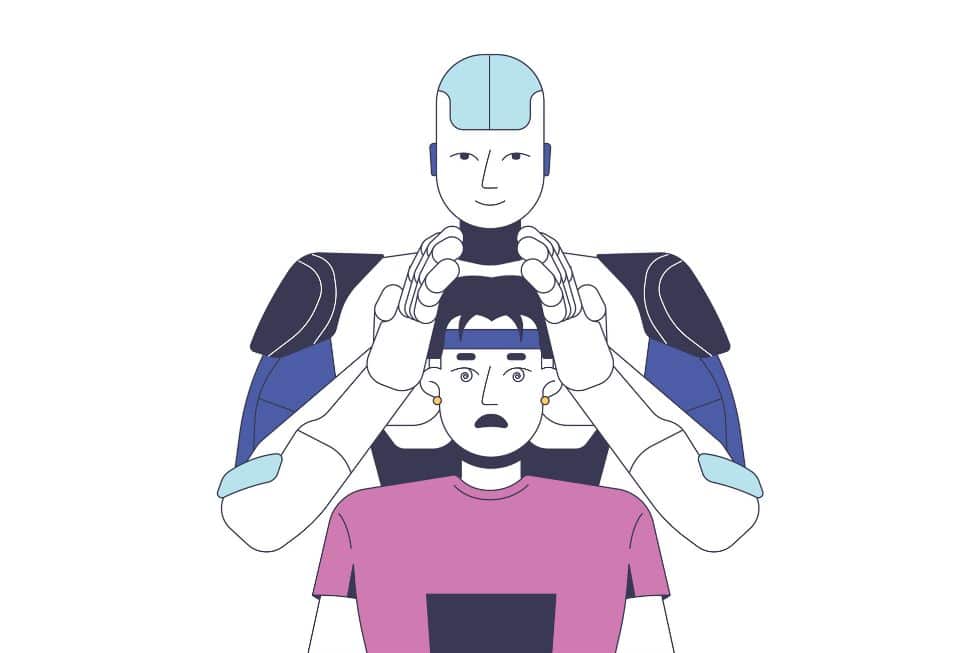
The argument behind “adopt AI or die” is presented as a modern version of Pascal’s Wager. In that framing, the safest choice is to back artificial intelligence now, because the cost of skepticism is said to be far greater than the cost of belief. The comparison suggests that even incomplete faith in AI can be treated as the rational move.
The piece connects that logic to Denis Diderot’s later criticism of Pascal, which questioned whether such a wager proves anything at all. By bringing that older philosophical exchange into the present, the article highlights how thin this style of reasoning can be. What sounds clever in theory begins to look much weaker when it is used to guide real decisions.
That matters because the article argues this is no longer just an abstract debate. A growing number of influential figures, including some of the wealthiest and most powerful people, appear to promote AI in terms that make hesitation seem reckless. In that climate, belief in artificial intelligence can start to resemble a demand rather than a conclusion supported by evidence.
The broader warning is about how easily grand claims become accepted as practical wisdom. When AI is treated as an all-or-nothing bet, uncertainty, tradeoffs, and critical scrutiny can be pushed aside. The result is a public conversation in which the pressure to adopt AI may say as much about power and persuasion as it does about the technology itself.