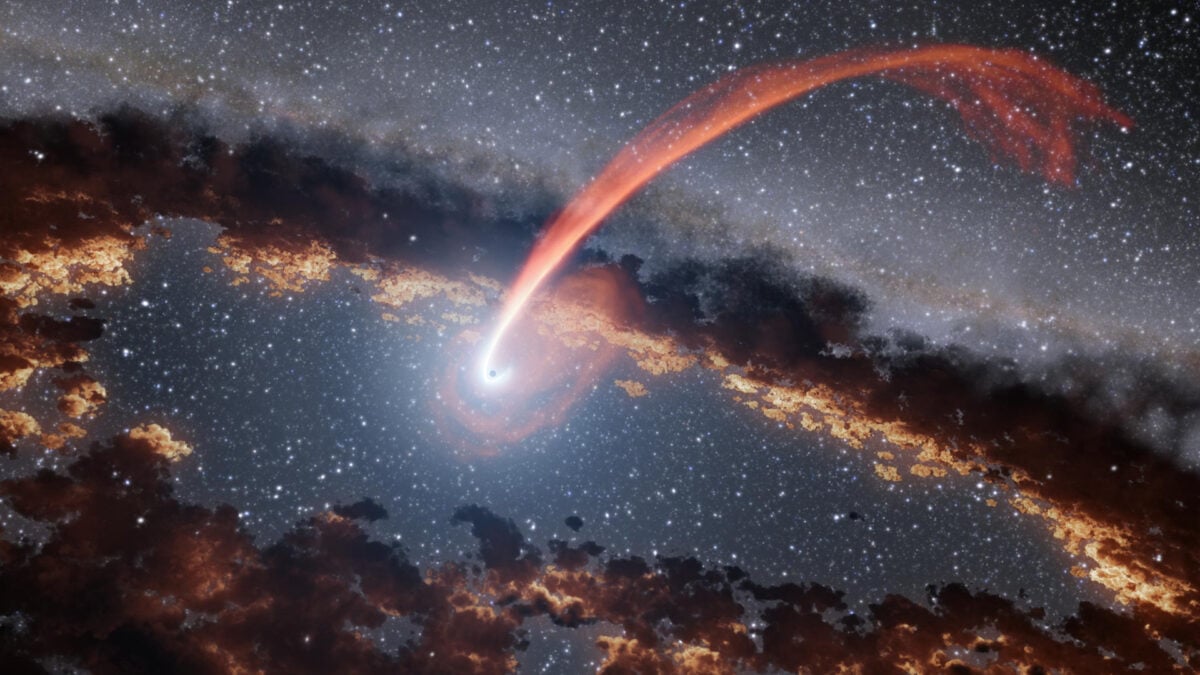
Black holes are often described as cosmic traps that swallow anything that gets too close. But a new high-resolution look at a black hole’s feeding behavior points to a more complicated picture, one in which incoming matter is not simply lost without a trace.
The report describes a black hole “meal” that appears to involve large expulsions of gas. That has led to a playful comparison with indigestion, suggesting that black holes can push some material back out after matter gathers around them. In other words, the process may look less like a one-way drain and more like a turbulent system with intake and output.
This kind of observation matters because it helps scientists refine how they think about black hole growth and the behavior of gas in extreme environments. Material around a black hole can heat up, swirl, and interact in ways that are difficult to capture, so a detailed movie offers a clearer view of what happens during feeding episodes.
While the humorous language has drawn attention, the broader scientific point is serious: black holes may be better understood as dynamic engines that can both consume and expel matter. That makes them more complex than the familiar image of a bottomless pit and gives researchers another window into how these powerful objects shape the space around them.