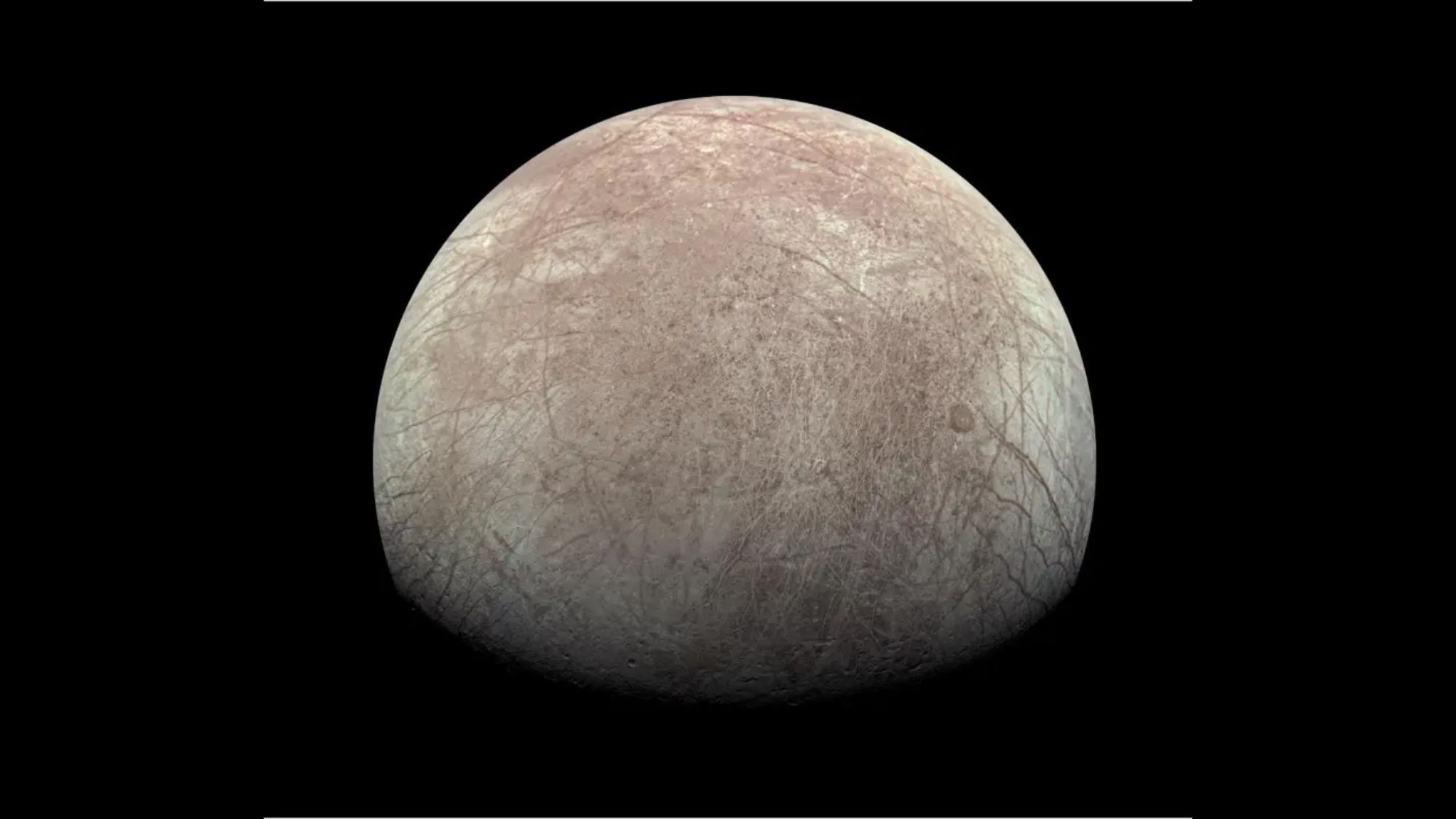
Europa, one of Jupiter’s most studied moons, remains a prime target in the search for life beyond Earth because scientists believe a vast ocean lies buried beneath its icy surface. New work highlighted in the report focuses on whether that hidden ocean could preserve signs of life and how researchers might recognize them.
The research does not suggest that life has been confirmed on Europa. Instead, its value is in helping future missions make sense of what they detect and identify the best places to investigate for signs of habitability. That kind of guidance is important when scientists are working with limited data from a distant world.
A major obstacle is access. If meaningful clues are trapped in Europa’s subsurface ocean, reaching them directly is far more difficult than studying material on or near the surface. As a result, spacecraft will likely need to rely first on indirect evidence and careful interpretation of whatever signals or samples they can gather.
That makes Europa both promising and challenging. The moon’s buried ocean keeps interest high, but the path to finding convincing evidence of habitability—or possible life—depends on smarter mission planning and better ways to read the clues Europa may already be offering.