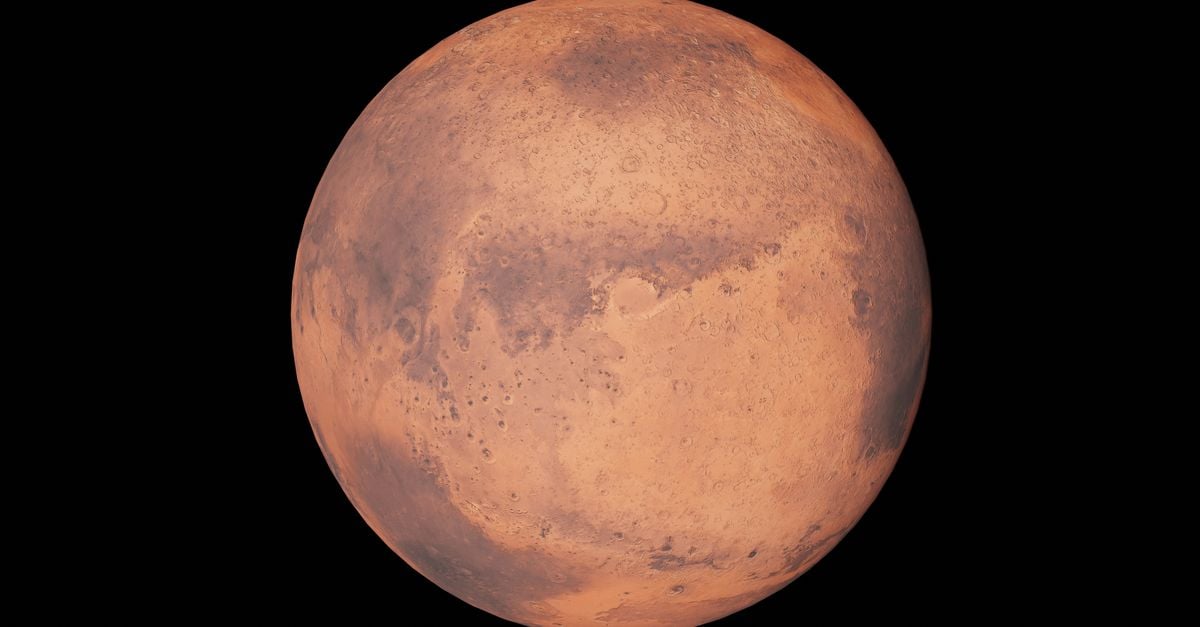
Mars is now a frozen, dusty world with an atmosphere too thin to support stable liquid water on the surface. But evidence from the planet's past points to a very different environment, one that likely included rivers, lakes, rainfall and perhaps even a large ocean billions of years ago.
Scientists have long tried to explain what happened to that water. One major answer is atmospheric loss. As Mars lost much of its protective atmosphere, solar wind could more easily strip gases away into space. Over time, that process would have made the surface colder and drier, allowing water to disappear from the open environment.
A second explanation suggests that not all of Mars's water vanished into space. A large share may still exist below ground, trapped deep in the crust or bound inside rocks and minerals. In that view, Mars did not simply lose its water outward; it also absorbed and stored a significant amount internally.
These ideas are not necessarily in conflict. Together, they describe a planet shaped by both escape to space and long-term storage underground. That combined picture may help explain how Mars went from a wetter world to the barren landscape seen today, while still preserving part of its watery history out of sight.