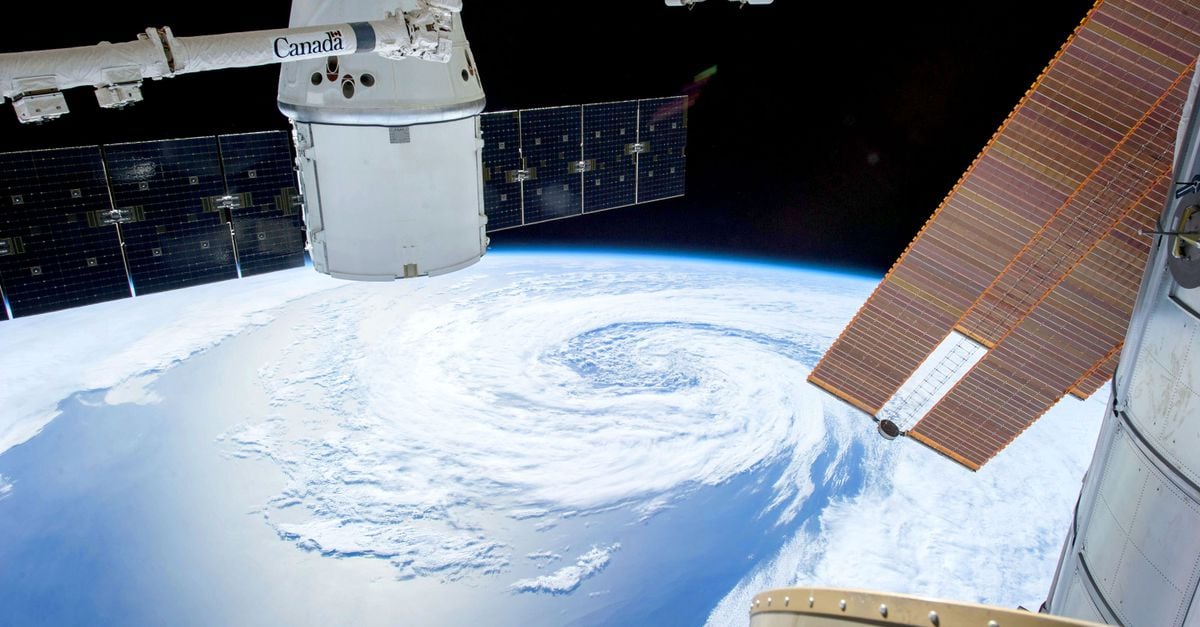
A single 1968 image of Earth rising above the Moon helped change how people thought about their home world. For the first time, the planet could be seen as a complete sphere suspended in darkness rather than as separate countries, coastlines, and horizons. That view gave many people a new sense of Earth as one connected place.
Astronauts who have seen the planet whole from space have often described a similar mental shift. The experience is now widely known as the overview effect, a term used for the powerful emotional and psychological response that can come from looking back at Earth from orbit or beyond. Those who report it often say the planet appears fragile, beautiful, and unified in a way that is difficult to express from the ground.
Researchers are increasingly interested in why this happens. Scientists are studying how seeing Earth in full, isolated against the blackness of space, may alter perception, emotion, and a person’s sense of humanity’s shared position on the planet. Because relatively few people have had that view firsthand, the effect remains hard to measure, but interest in space psychology is growing.
The lasting impact of the Earthrise image shows that this perspective is not limited to astronauts alone. Even for people who only encounter the view through photographs, the idea of Earth as a single, living world can reshape how they think about nature, borders, and human life. As more attention turns to the overview effect, scientists are trying to better understand why one look at Earth from space can leave such a lasting mark.