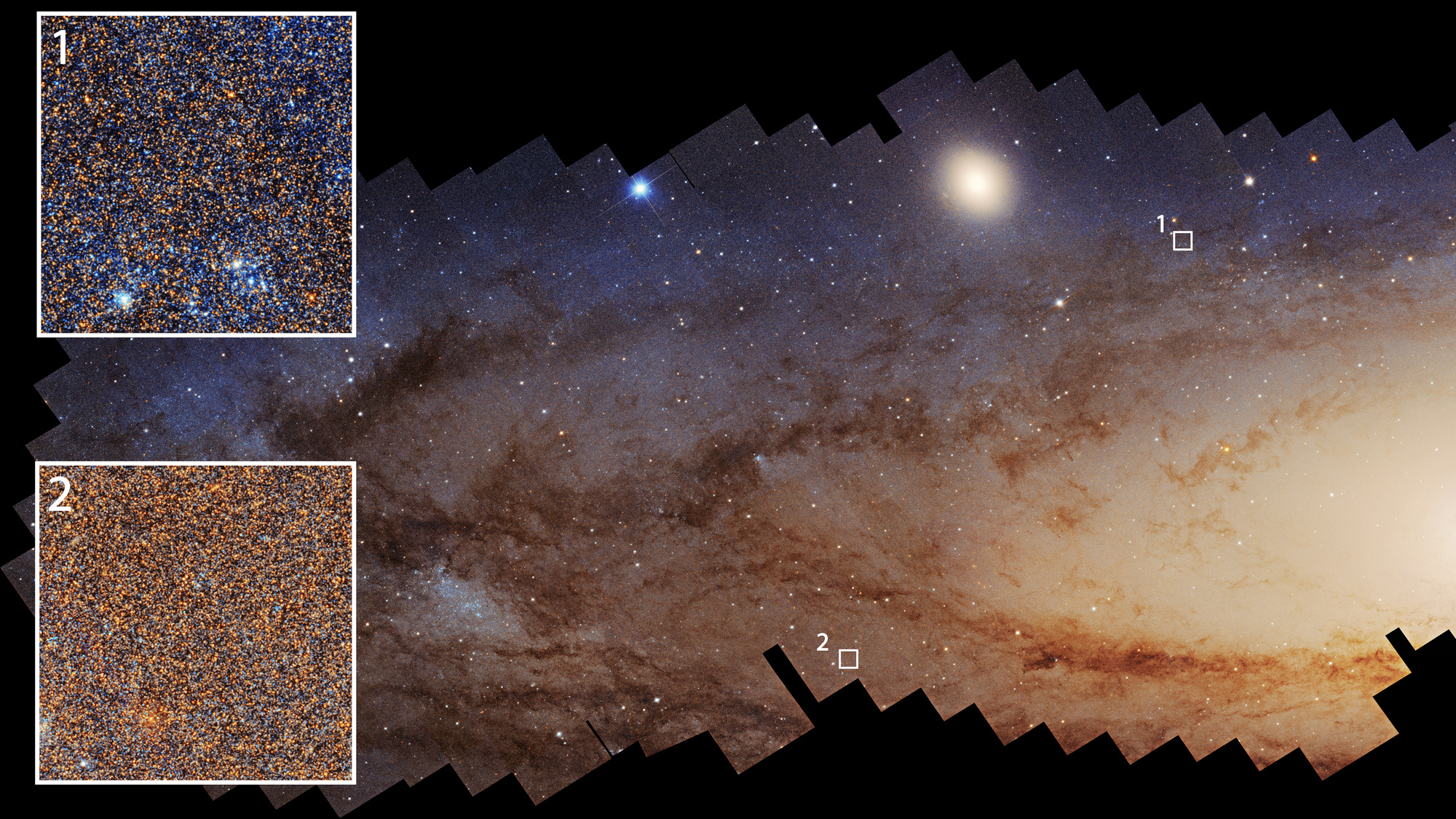
NASA’s Hubble Space Telescope has captured one of the most detailed views yet of the Andromeda galaxy, offering a fresh look at Earth’s famous neighboring spiral. The new attention on Andromeda highlights both its scale and its structure, showing why it remains one of the most studied galaxies in the sky.
The latest findings also point to a change in how astronomers see Andromeda’s current state. While the galaxy has long been associated with vigorous star production, this view suggests it is no longer the star factory it once appeared to be. That makes the image important not just for its beauty, but for what it says about how large galaxies evolve over time.
The Hubble observations arrive at a moment when another major NASA mission is drawing interest. The upcoming Nancy Grace Roman Space Telescope is expected to expand on this kind of work, helping researchers survey broad cosmic scenes and gather new data on galaxies like Andromeda.
Together, Hubble’s detailed Andromeda image and the promise of Roman’s future observations underline a broader shift in space science: pairing iconic close-up views with wider, deeper studies of the universe. For Andromeda, that means astronomers may soon have an even clearer picture of how this nearby giant has changed.