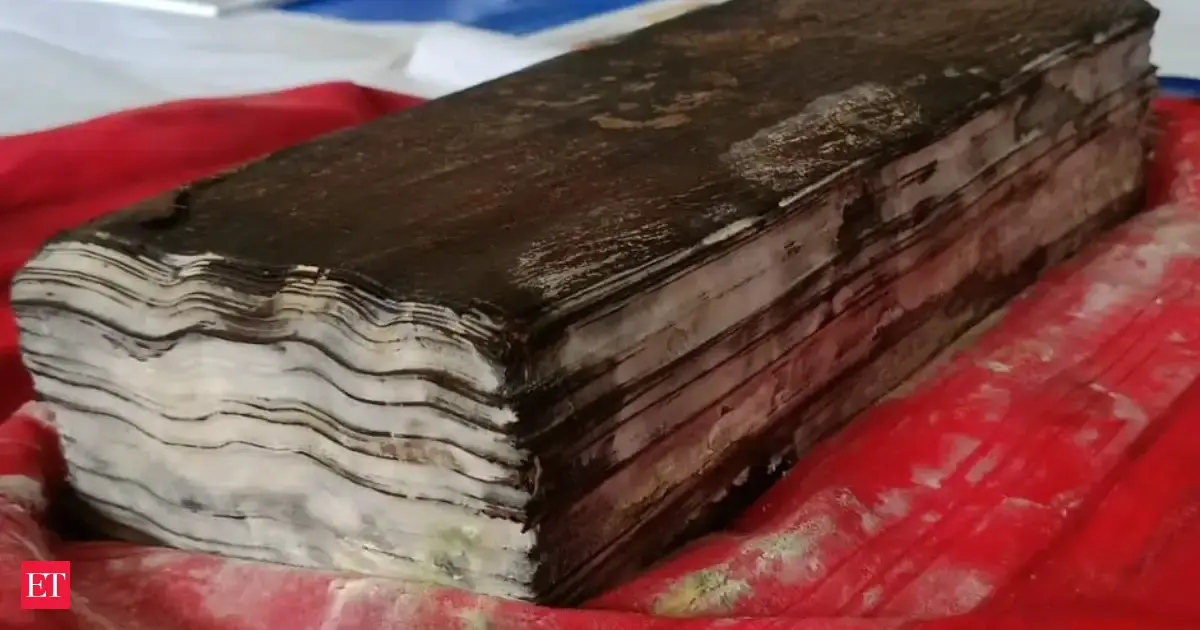
Conservation teams in Assam are racing to protect a valuable collection of handwritten manuscripts at the historic Gajala Satra after floodwaters damaged the centuries-old texts. As the water has gone down, the scale of the loss has become clearer, with moisture exposure and fungal growth now posing the biggest threat to the fragile material.
The affected collection is described as especially important because it includes rare Vaishnavite religious texts preserved at the satra, a traditional monastic institution with deep cultural and historical significance in Assam. Experts are focusing on stabilising the manuscripts first, since damp conditions can quickly worsen deterioration once mould begins to spread.
Restoration work after flooding is typically a race against time, and that appears to be the case here as well. Specialists are working to dry, clean and protect the damaged pages carefully so that the writing and physical material can be preserved as much as possible. The challenge is greater with very old manuscripts, which can weaken rapidly after prolonged contact with water.
The damage at Gajala Satra has also highlighted the vulnerability of heritage collections during extreme weather events. For now, the priority remains stopping fungal growth and recovering as many of the 300-year-old handwritten works as possible before the damage becomes irreversible.


![Day 1,623 of WW3. Today's MadLib: UAF uses sea drones to carry FPV drones to attack Crimean radars. Orcs destroy 300 year old Cossack church in Kherson, and another Widlberries warehouse has a sale on cotton. This is your Tuesday Ukraine war thread [News]](https://usrimg-full.fark.net/S/Sc/fark_ScK2-Rj1YUbqjDR8apivwZuDaxc.png?AWSAccessKeyId=JO3ELGV4BGLFW7Y3EZXN&Expires=1786334400&Signature=E%2BnUtSPWmcfIKWli9V%2FJVvIa6tw%3D)