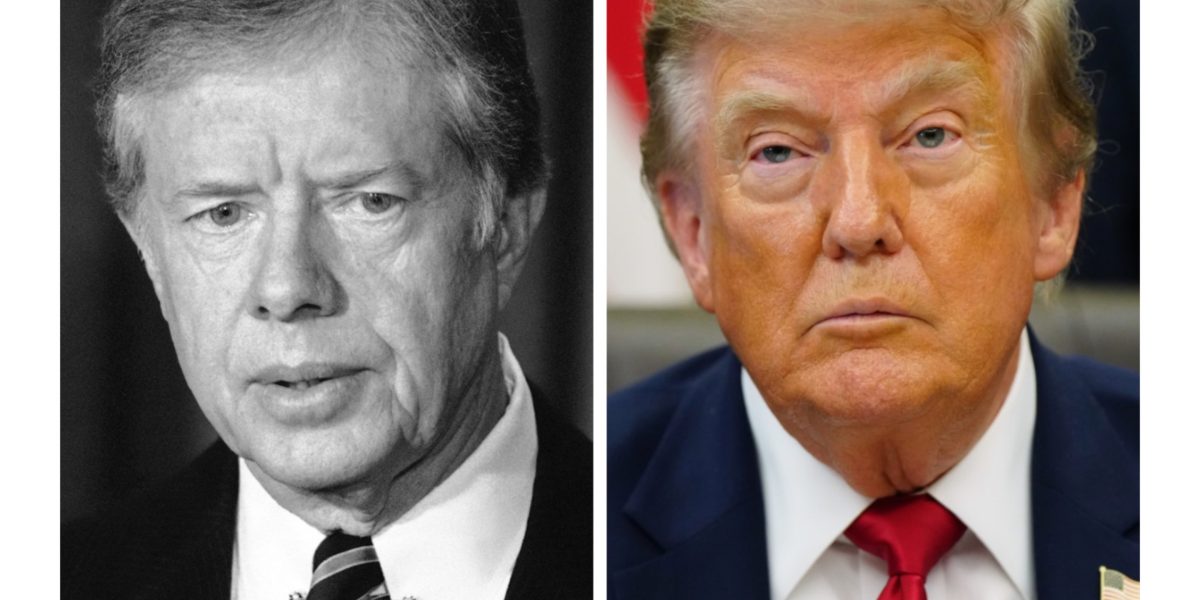
Donald Trump has long used Jimmy Carter as a political contrast, holding up the former president as a symbol of Democratic weakness while presenting himself as tougher and more decisive. But analysts now say Trump’s tone toward Carter appears to be changing, especially as events involving Iran make Carter’s presidency look more relevant than before.
According to experts, that shift suggests Trump may be recognizing how difficult it is to navigate the same kinds of international pressures that shaped Carter’s time in office. What once served as an easy political attack line is now being viewed through a more complicated historical lens, with Carter’s choices seeming less simple in hindsight.
The discussion centers on the idea that history can alter political judgment. As tensions involving Iran draw attention to past U.S. confrontations in the region, Carter is no longer seen only as a convenient foil. Instead, his presidency is being reexamined as a case study in how even leaders who promise strength can be constrained by events beyond their control.
That reassessment does not erase Trump’s past criticism, but it does point to a broader political reality: presidents often understand their predecessors differently once they face comparable challenges themselves. In that sense, experts argue, Trump’s more reflective posture toward Carter may say as much about the present as it does about the past.