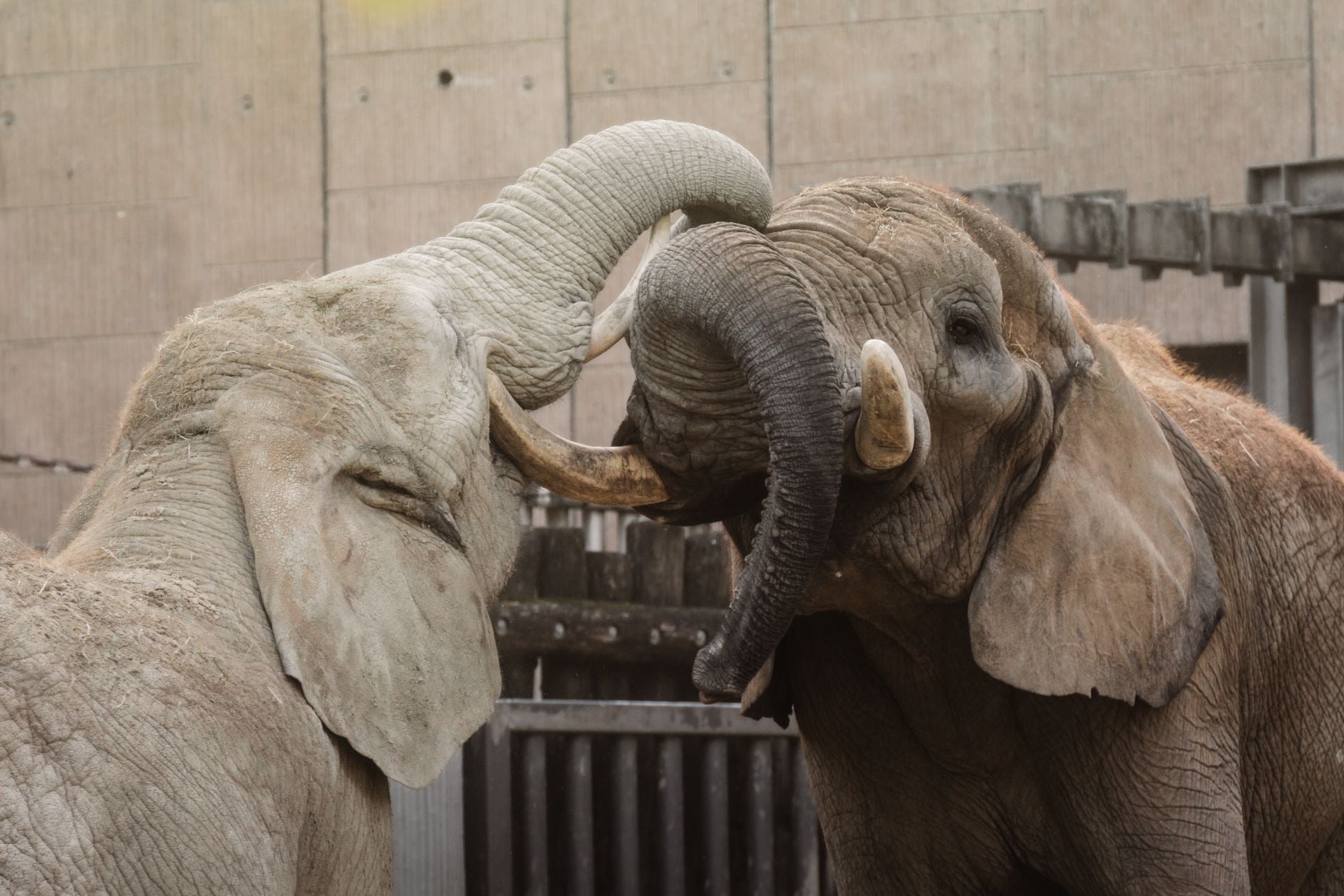
Elephants may be doing more during play than roughhousing with trunks and bodies. Research on African savannah elephants suggests that when one animal makes a noticeable trunk or head movement, a nearby play partner can quickly copy it.
That kind of fast, body-based imitation resembles contagious behavior seen in people, such as smiling or laughing in response to someone else. In elephants, the effect appears during playful interactions, adding a new layer to how scientists understand their social lives.
The findings point to mimicry as part of elephant play, not just chasing, sparring or wrestling. By mirroring each other’s movements, the animals may be reinforcing attention, coordination or social connection while interacting.
The study adds to growing evidence that elephants have rich and responsive social behavior. Seeing this kind of rapid copying in play could help researchers better understand how these animals communicate emotion and bond with one another through movement.





