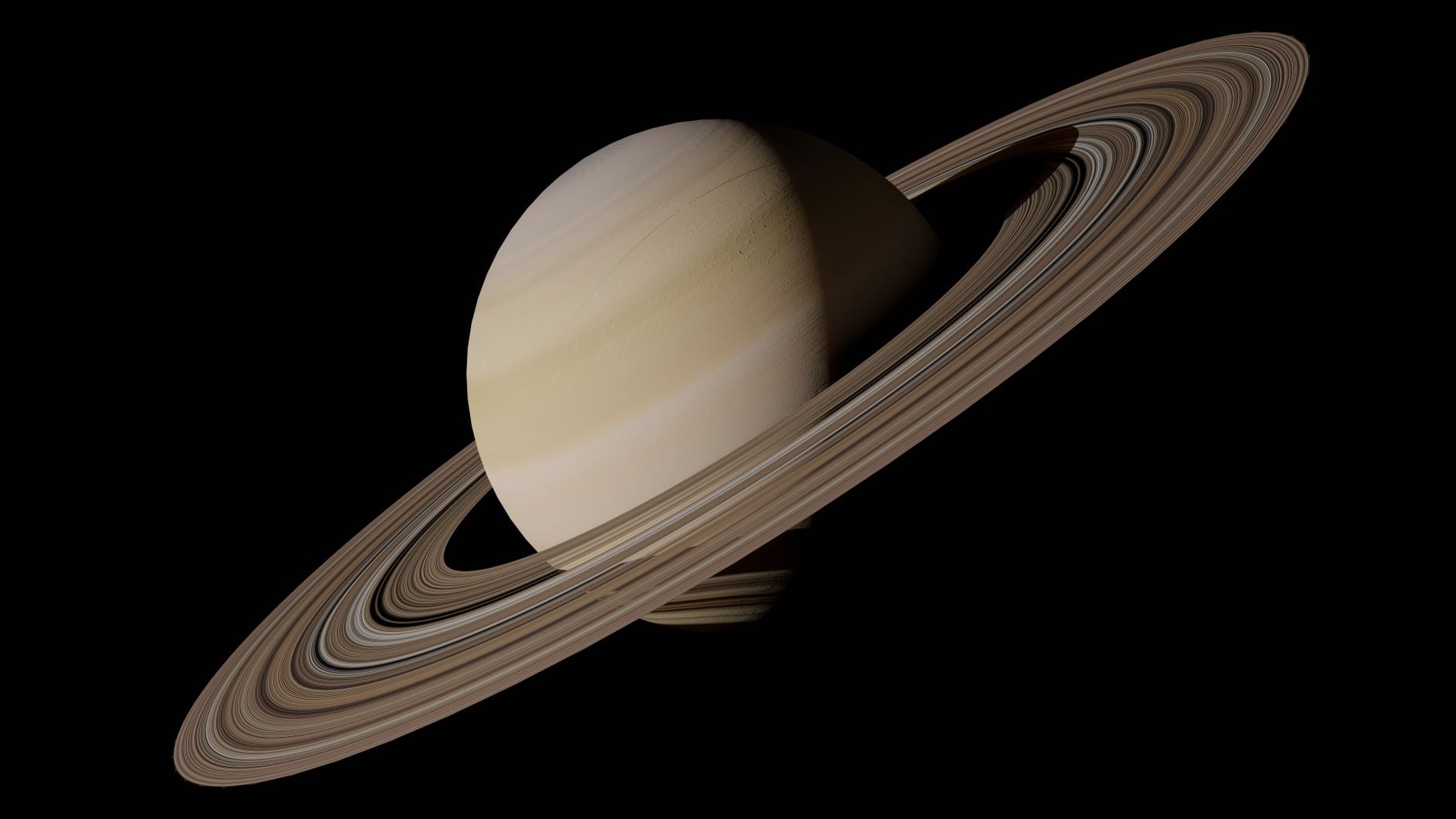
Voyager 1 made one of its most consequential planetary flybys on 12 November 1980, when it swept past Titan during its visit to Saturn. The spacecraft passed about 6,490 kilometres from Titan’s centre, or roughly 3,900 kilometres above the moon’s obscured surface, giving scientists a rare close look at Saturn’s largest moon.
That encounter helped reveal one of Titan’s defining features: a thick atmosphere rich in nitrogen. The moon’s surface remained hidden beneath dense haze, but the flyby showed that Titan was far more than an icy satellite, standing out as a world with a substantial atmosphere unlike most moons in the Solar System.
The geometry of the pass was also important. Voyager 1 moved behind Titan as seen from Earth and from the Sun, a setup that added to the scientific value of the encounter and helped researchers study the moon’s atmospheric envelope.
But the Titan flyby came with a major trade-off. The gravity assist from the close approach permanently bent Voyager 1 out of the planetary plane, ending any realistic path onward to Uranus and Neptune. In effect, the mission gave up future outer-planet flybys in exchange for a historic close inspection of Titan.