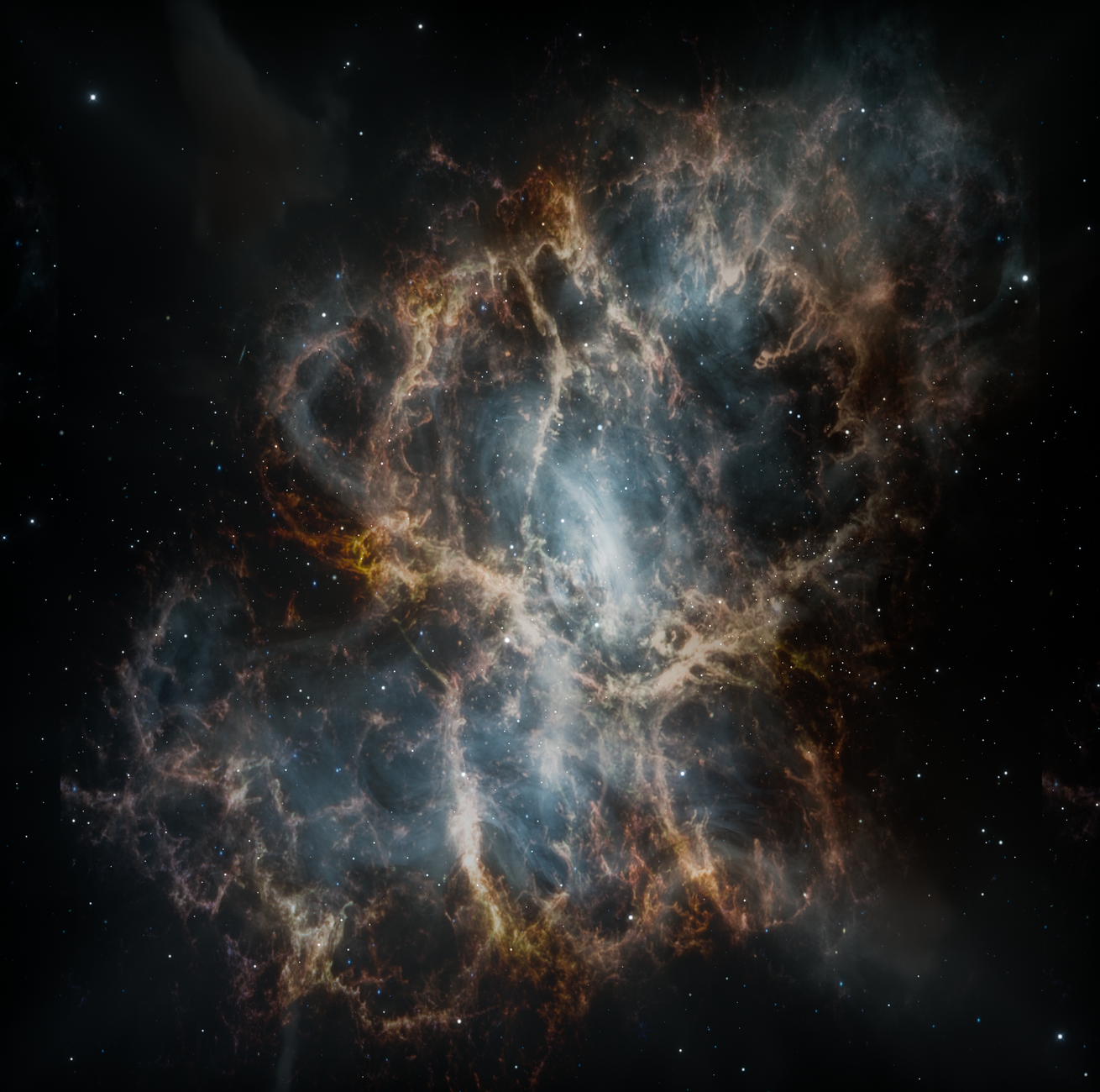
Scientists working with Japan's Super-Kamiokande detector say they have found the first indication of the diffuse supernova neutrino background, a signal researchers have pursued for decades. The finding points to a faint flow of neutrinos created by core-collapse supernovae throughout the history of the universe.
Super-Kamiokande sits deep underground, where the surrounding rock helps shield it from other particles and interference. That makes it one of the world's most important tools for detecting neutrinos, the nearly massless particles that rarely interact with matter. In this case, researchers were looking not for one dramatic event, but for a persistent background built up from countless stellar explosions over cosmic time.
The diffuse supernova neutrino background has long been predicted by theory, but proving it exists has been extremely difficult because the signal is so weak. A first indication from Super-Kamiokande suggests scientists may be getting close to directly observing this long-expected glow of neutrinos left behind by generations of dying stars.
If the result is strengthened by further analysis and future observations, it could open a new way to study how often stars have exploded across the universe and how those events shaped cosmic history. For now, the announcement marks an important step in neutrino astronomy and in the search for one of the faintest signals ever pursued.