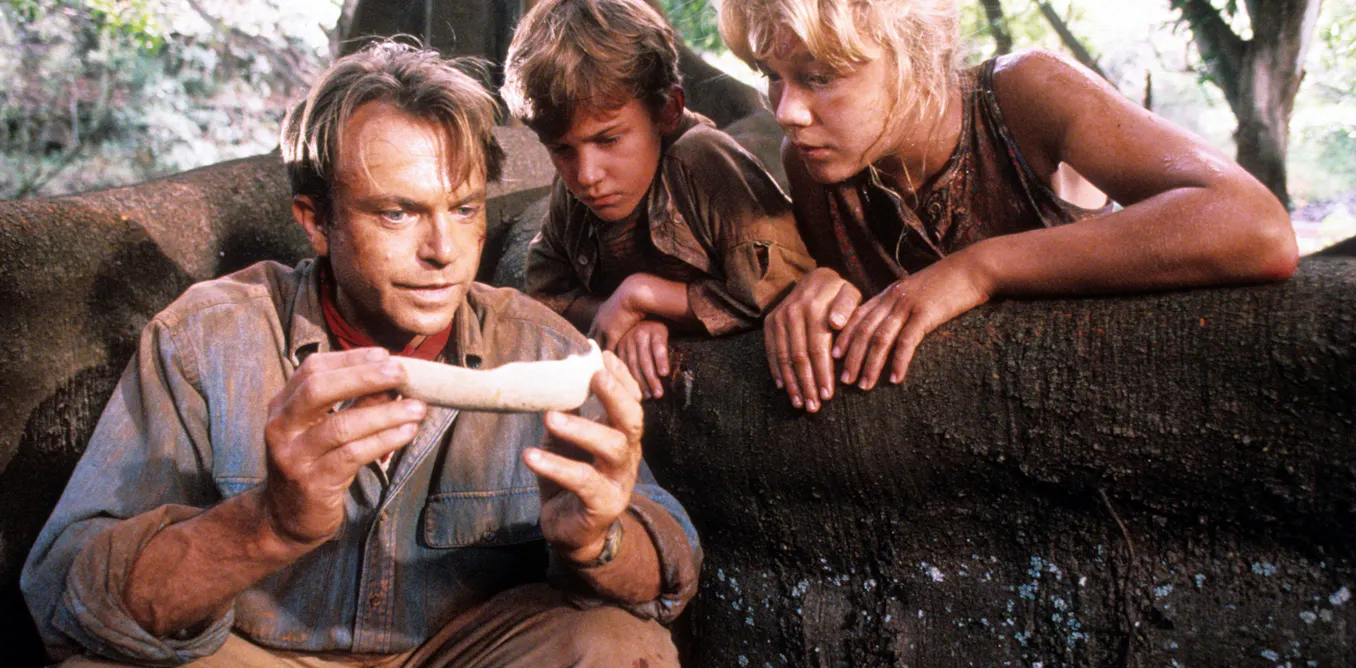
Sam Neill’s performance as Dr Alan Grant in Jurassic Park is being remembered not only as a defining film role, but also as a surprising influence on real scientific careers. According to the article, the response to news of Neill’s death reached far beyond the film world, with many palaeontologists reflecting on what his character meant to them when they were young.
For many future researchers, Grant stood out because he did not feel like an exaggerated Hollywood genius. He came across instead as a believable field scientist: knowledgeable, awkward at times, and deeply interested in ancient life. That grounded portrayal helped make palaeontology seem like a real and attainable path rather than a distant fantasy.
The article argues that this kind of representation mattered. Seeing a scientist presented as capable, curious and human gave many viewers a model they could imagine themselves following. In that sense, Jurassic Park did more than entertain audiences with dinosaurs; it also helped shape how a generation thought about science and the people who do it.
Neill’s legacy, then, extends into classrooms, museums and excavation sites as well as cinema history. For many palaeontologists, his version of Alan Grant was an early spark that turned fascination with dinosaurs into a lifelong profession.





