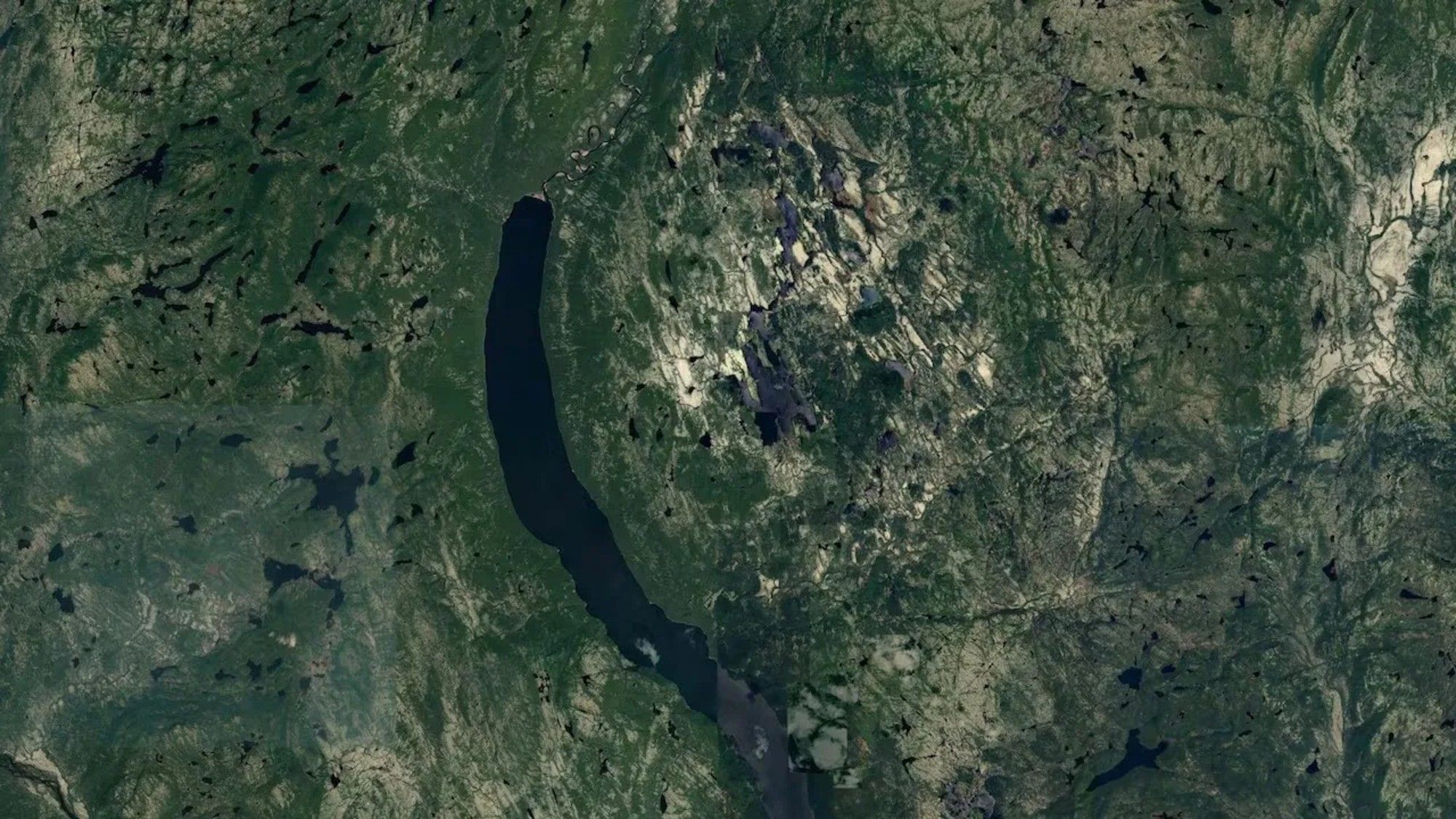
A massive crater-like feature identified on Google Earth is drawing scientific attention as a possible remnant of an ancient meteorite impact. The site, known as Uhackatik, has been suspected to be a crater, and researchers now appear to have stronger reasons to investigate that idea.
According to the report, scientists observed what are described as shock metamorphic effects at Uhackatik. Those kinds of changes in rocks can be linked to intense pressure, making them an important clue when researchers try to determine whether a structure was created by an impact from space rather than by other geological processes.
The work is not finished, and the feature has not been definitively confirmed as an impact crater. Researchers are now examining its chemistry and looking at its physical characteristics under the microscope, steps that could help clarify how the structure formed and whether a meteorite strike is the best explanation.
If the evidence continues to support the impact theory, Uhackatik could become a notable example of how satellite imagery and detailed rock analysis work together in planetary and Earth science. For now, the feature remains a promising candidate as scientists test whether this giant scar is truly the mark of a long-ago collision.