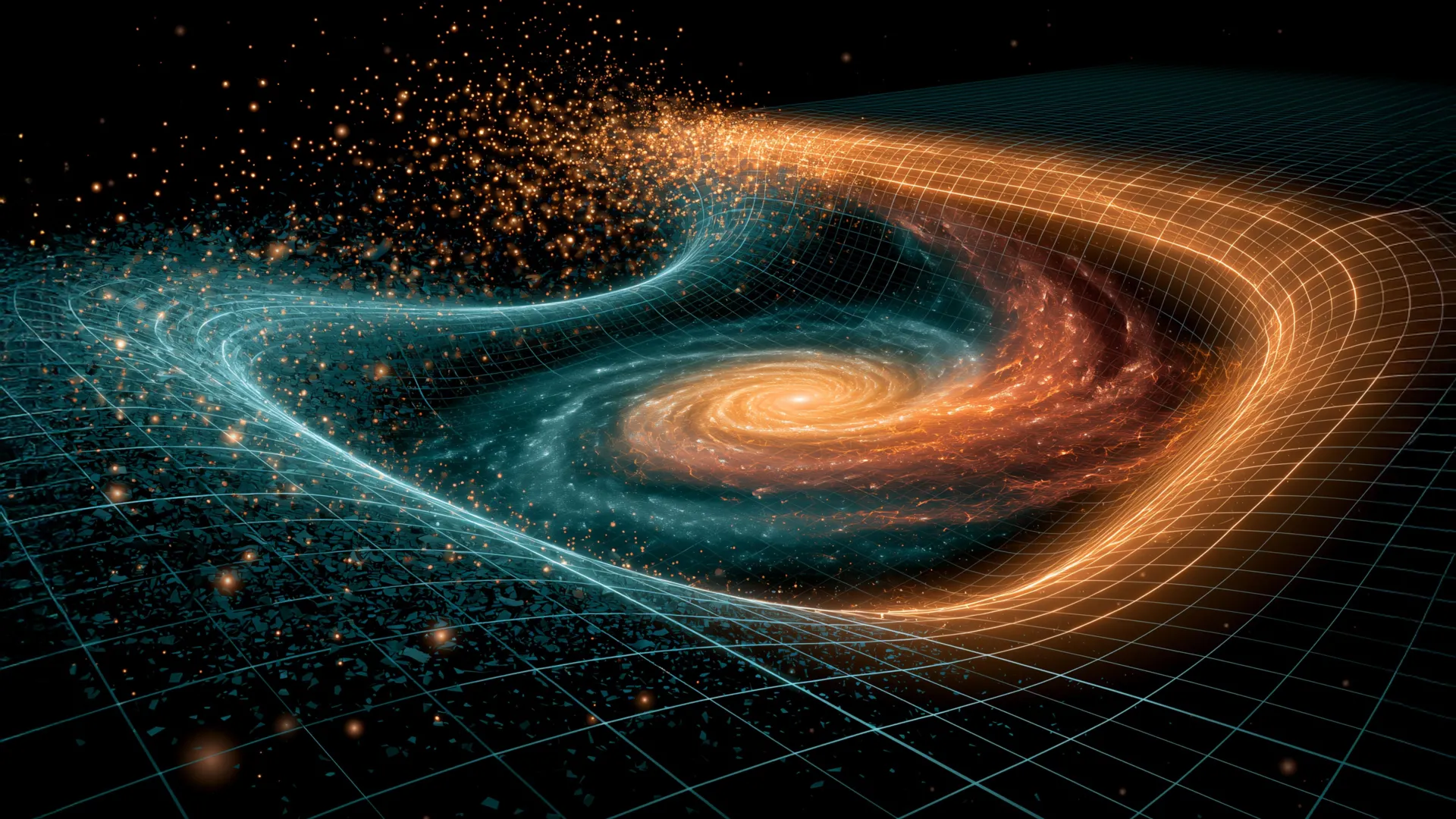
A new theoretical study explores one of physics' biggest questions: how the Universe became increasingly structured while still obeying the second law of thermodynamics. That law says entropy tends to rise, yet the cosmos has also produced galaxies, stars, planets and eventually life. The research suggests those two ideas may not be in conflict.
According to the report, mathematician Ginestra Bianconi used a quantum gravity approach called Gravity from Entropy to examine the problem. In this framework, gravity is connected to entropy, offering a possible way to understand how large-scale order and complexity can emerge as the Universe evolves.
The study also points to a broader link between entropy, dark energy and life. Rather than treating complexity as something that stands apart from thermodynamics, the work suggests it could arise within the same underlying rules that govern cosmic expansion and the behavior of the Universe at fundamental scales.
Because the research is theoretical, it does not settle the issue, but it offers a fresh way to connect major ideas in modern physics. If the approach holds up, it could help explain how a Universe governed by increasing entropy still gave rise to the rich structures seen today, from cosmic systems to living organisms.