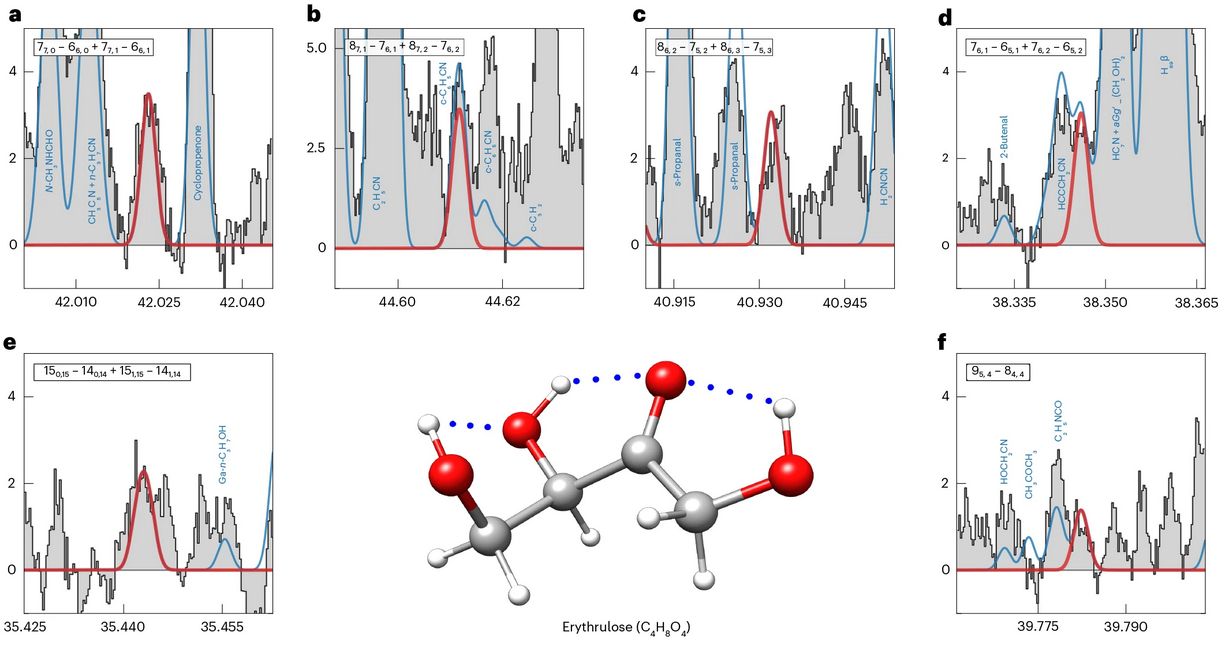
A reported detection of a four-carbon sugar in interstellar space is drawing attention because it adds another potentially important piece to the puzzle of how life begins. Scientists have long tried to understand how the first biological cells on Earth emerged, and discoveries like this suggest some of the necessary chemistry may start far from any planet.
The finding points to a broader idea in astrobiology: complex organic molecules may be able to form in space before becoming part of planets, moons, comets, or other bodies. If sugars and other prebiotic compounds can exist in the interstellar environment, then the chemical groundwork for life may be more widespread than once thought.
That matters because sugars play a central role in biology, including in molecules connected to living systems. A four-carbon sugar does not by itself explain how life started, but it strengthens the case that space can host increasingly sophisticated chemistry. Each new detection helps researchers map out the chain of steps that could lead from simple molecules to the ingredients needed for biology.
The discovery also has implications beyond Earth. If life’s raw materials can assemble in interstellar space, then worlds forming elsewhere may inherit some of the same chemical starting points. That does not prove life exists beyond our planet, but it does support the view that the universe may be chemically prepared to help it begin.





