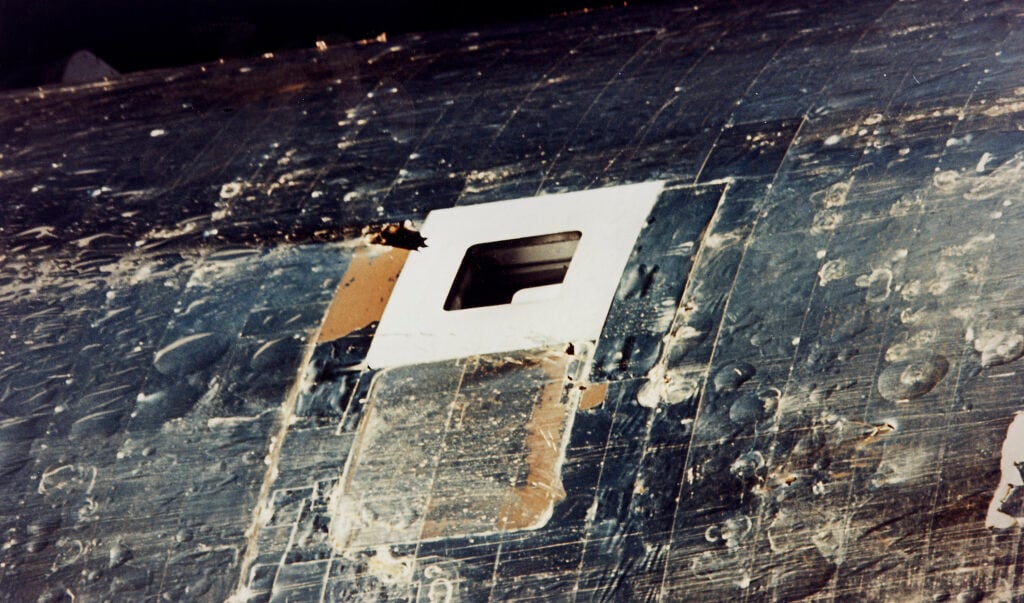
Skylab, America’s first space station, made it into orbit on 14 May 1973, but the mission immediately faced a major crisis. During launch, the station’s protective heat shield was torn away, leaving the orbital workshop exposed to intense sunlight. According to the account, one solar wing was also lost and the other remained stuck, creating both overheating and power problems.
The damage pushed temperatures inside Skylab to about 54°C, raising fears that the laboratory might become unusable before any astronauts could move in. With cooling protection gone and electrical generation reduced, NASA had to respond quickly to keep the station from being written off just after launch.
Engineers came up with an improvised answer in only a matter of days: a parasol-like sunshade that astronauts could carry into orbit and deploy inside the damaged station. The plan was especially risky because the repair needed to work on the first attempt, with little room for failure once the crew reached Skylab.
The emergency fix became one of the most notable examples of spaceflight problem-solving. By getting a workable shade to the station and addressing the launch damage, NASA was able to preserve Skylab and turn a near-disaster into a successful chapter in early American space station history.