A new Nature study examines how passerine body plans changed across roughly 50 million years, offering a long-term view of how this major bird group evolved through time and across regions. The research reconstructs the history of these forms and suggests that major changes were not constant, but instead concentrated in uncommon episodes.
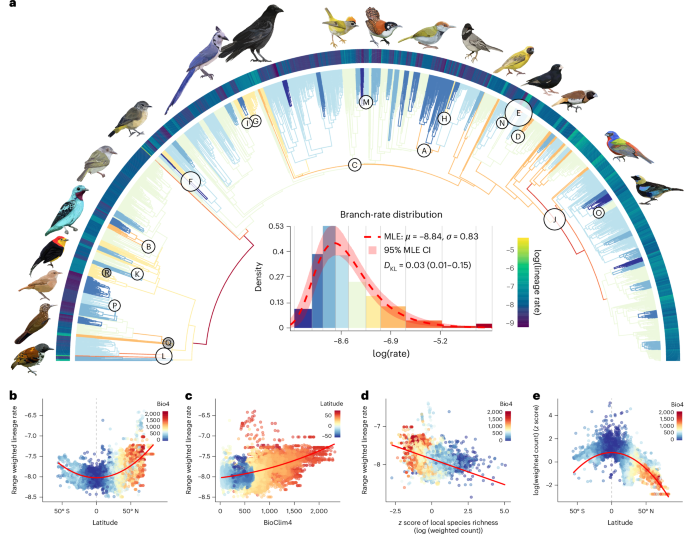
According to the study summary, the biggest bursts of phenotypic innovation appeared near the origins of major taxonomic groups. That points to an evolutionary pattern in which much of passerine history may have involved comparatively limited shifts, interrupted by shorter periods when new body forms emerged more rapidly.
The timing of those bursts is also notable. The researchers report that they were temporally aligned with periods of greater climatic instability, suggesting that environmental disruption may have helped create conditions for faster evolutionary change. In that sense, the work connects the pace of anatomical diversification to broader changes in Earth’s climate history.
Overall, the findings add to the picture of bird evolution by showing that diversification in passerines may have unfolded unevenly in both time and space. Rather than a steady march of innovation, the study indicates that rare but significant evolutionary pulses played an outsized role in shaping the body plans seen across major passerine lineages today.