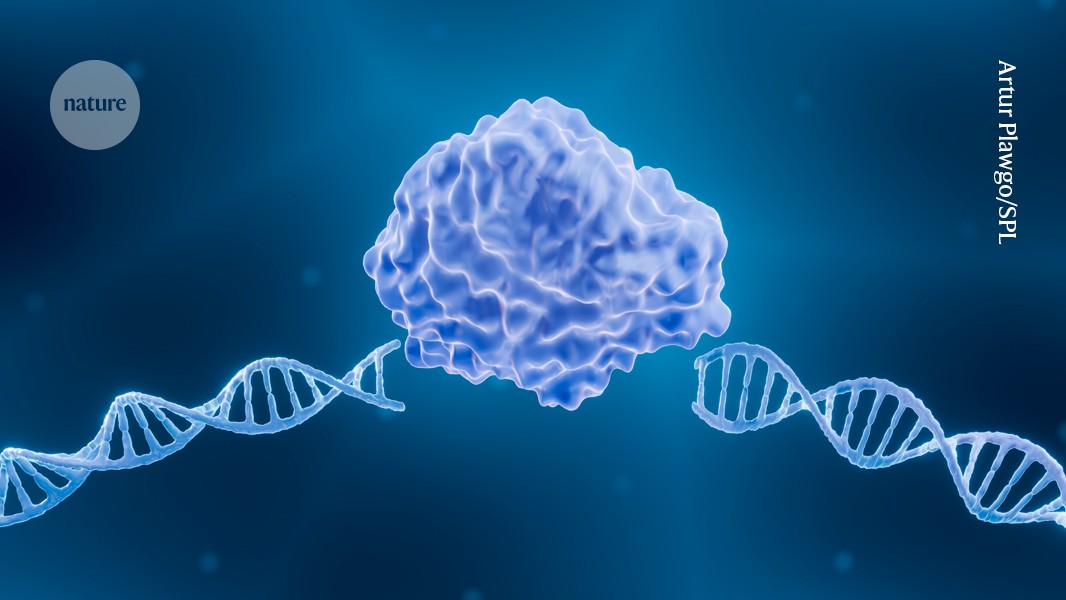
Researchers have used artificial intelligence to design new CRISPR-related enzymes, creating gene-editing tools that do not appear in nature. The work points to a major step forward for molecular biology, where scientists are looking for more precise and flexible ways to cut DNA.
CRISPR systems are often described as molecular scissors because they can be guided to specific genetic sequences and then make targeted cuts. By using AI to design functional enzymes from scratch, researchers may be able to expand the range of available editing components beyond the natural proteins that scientists have relied on so far.
The report suggests that artificial intelligence can speed up the search for useful enzyme designs, helping scientists move more quickly from concept to working biological tools. That could be especially important in a field where small changes in an enzyme’s structure can affect how well it performs and what kinds of genetic targets it can reach.
Although the full implications will depend on how these new enzymes perform in future studies, the advance highlights a growing overlap between AI and biotechnology. In this case, machine-designed molecular scissors could give CRISPR a broader and potentially more powerful toolkit for research and other applications.