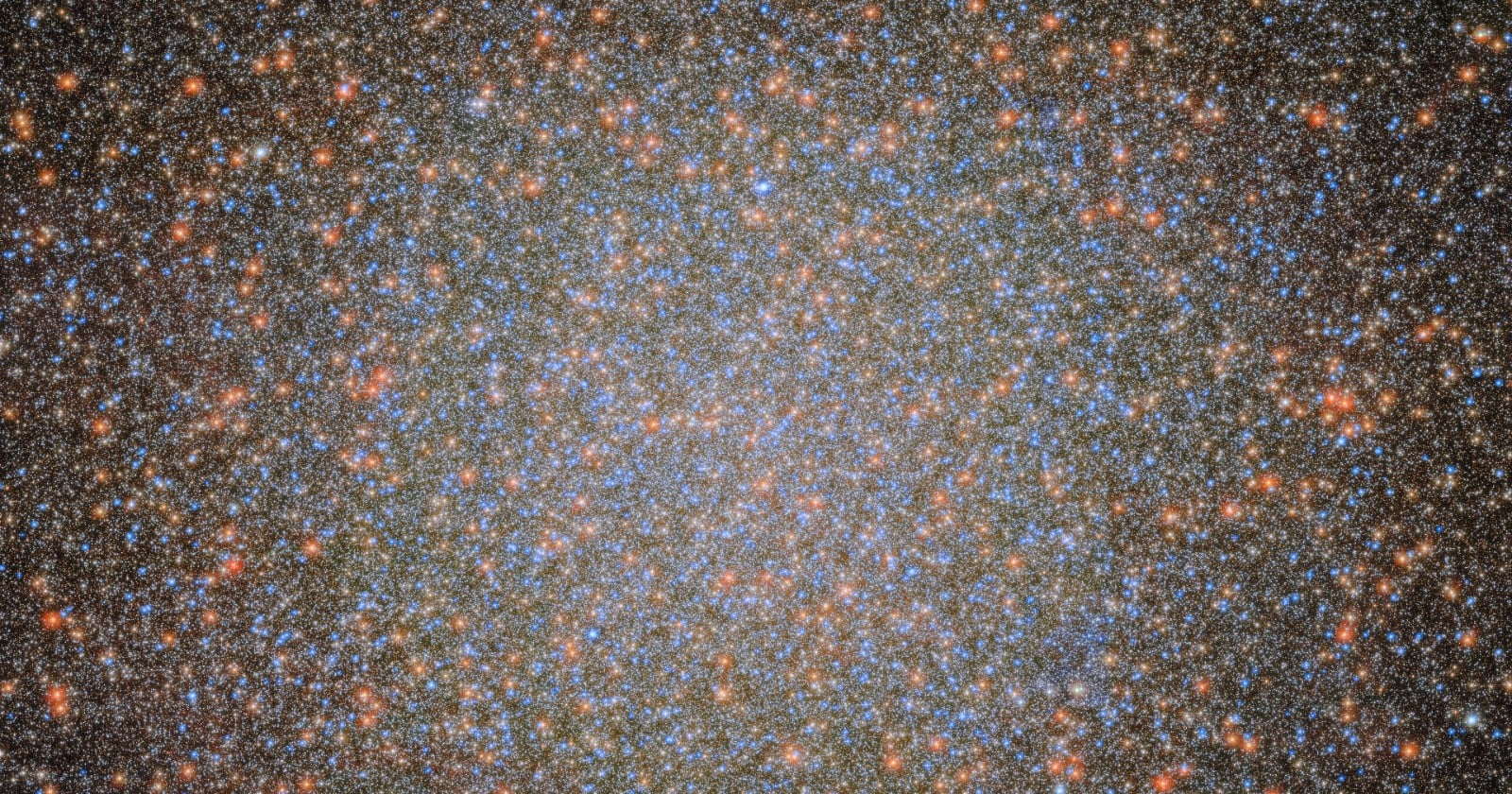
Astronomers have identified what appears to be the first stellar-mass black hole found in Omega Centauri, paired with a star that circles it in about 94 years. Based on the reported period, the system is the longest-period black hole binary detected so far.
The finding stands out because Omega Centauri is thought to contain a large hidden population of stellar-mass black holes. Researchers estimate there could be around 10,000 of them in the cluster, but this is the first one reported there and the only one whose orbit with a companion star has been traced.
There is an important limitation to the result: the orbit has not been fully completed in observations. The 94-year period is based on a partial section of the star's path, meaning the estimate reflects the portion astronomers have been able to measure so far rather than a full loop.
Even with that caveat, the system offers a rare way to study an otherwise dark object by tracking the motion of the star bound to it. As more observations are gathered over time, astronomers should be able to refine the orbit and learn more about how black holes are distributed inside Omega Centauri.