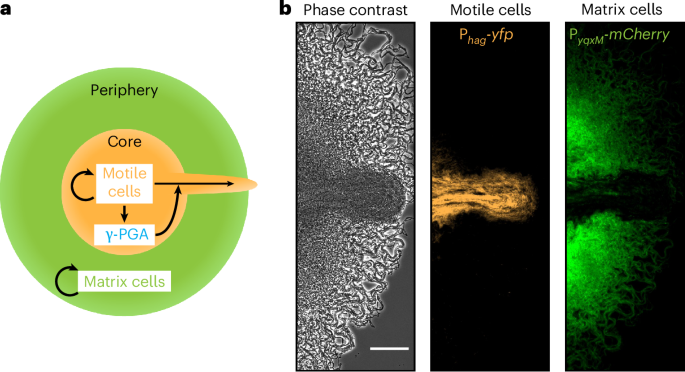
Researchers reporting in Nature describe a biofilm escape mechanism in Bacillus subtilis that relies on a secreted hydrogel. Instead of simply breaking apart, the bacterial community can generate osmotic pressure that physically pushes motile cells out of the biofilm.
The finding adds a new layer to scientists’ understanding of how biofilms form, persist and eventually disperse. Biofilms are important because they can protect bacteria and make them harder to eliminate, a topic closely tied to ongoing research into antimicrobial resistance.
According to the study description, the pressure-based ejection process has mechanistic similarities to a phenomenon seen in Cnidaria, despite the vast evolutionary distance between these organisms. That parallel suggests that comparable physical strategies can emerge in very different forms of life.
The work could have implications beyond basic microbiology. By clarifying how bacteria exit protected communities, the research may help guide future efforts to disrupt harmful biofilms or improve treatments aimed at infections where biofilm behavior makes microbes especially resilient.