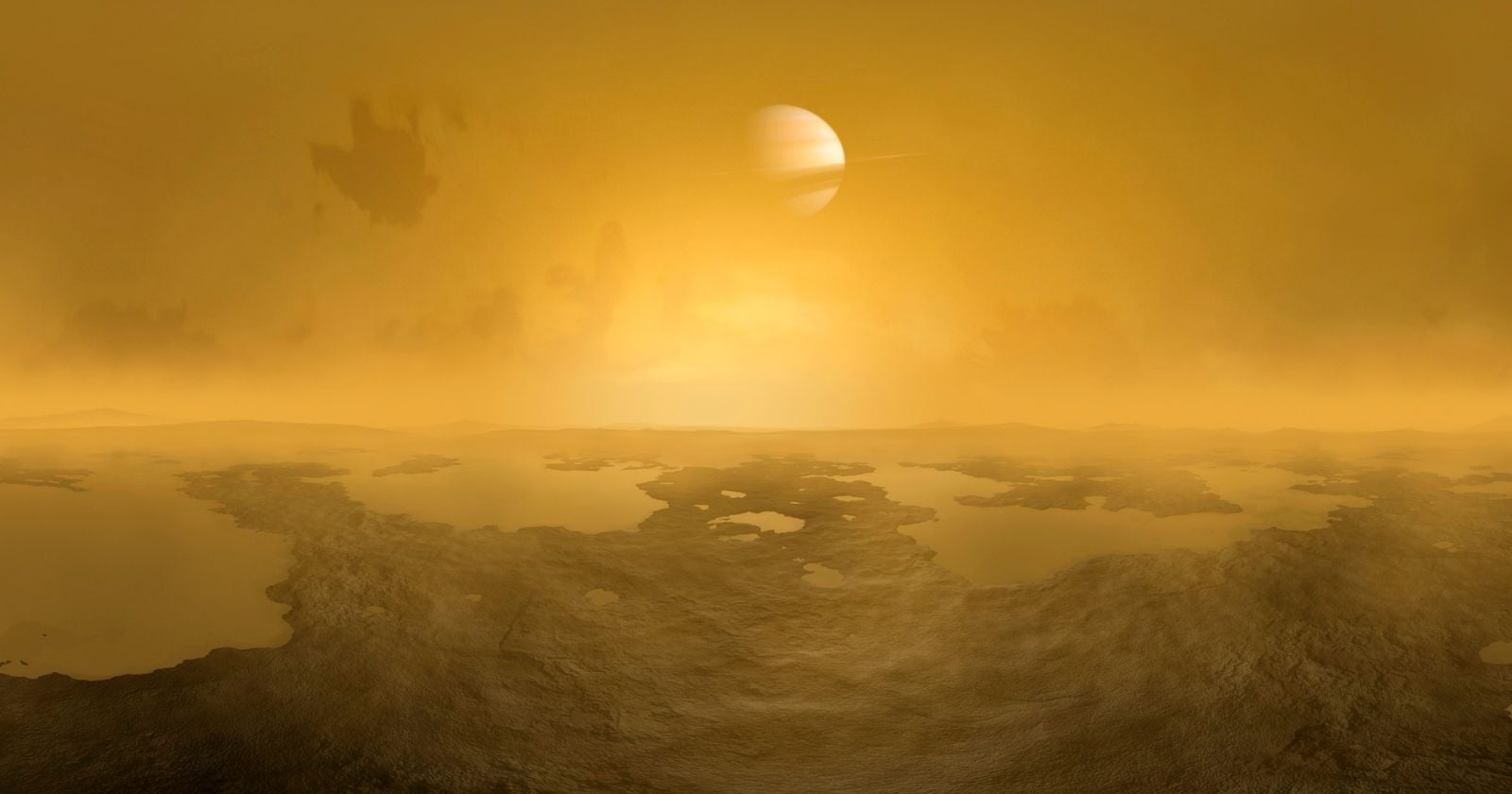
Titan, Saturn’s largest moon, stands out in the solar system because it appears to run a weather system that closely resembles Earth’s. It has clouds, storms, rain, rivers, lakes and even seas, but the liquid shaping the landscape is methane rather than water.
That makes Titan feel both familiar and strange. According to the description of the moon’s environment, rain can fall, channels can be carved and large bodies of liquid can collect on the surface, creating a full cycle similar to Earth’s hydrology. The key difference is that Titan is so cold that methane takes water’s place in the process.
The surface itself is just as unusual. Titan’s “bedrock” is water ice frozen to around minus 179 degrees Celsius, making it hard enough to behave like stone on Earth and even support mountainous terrain. That extreme cold helps define the moon’s alien geology and weather at the same time.
A glimpse of that world came when the Huygens probe descended through Titan’s orange haze in January 2005 and landed on a plain covered with rounded pebbles. The first blurry surface view suggested a landscape with recognizable features, even though the chemistry and temperatures make Titan unlike anywhere on Earth.





