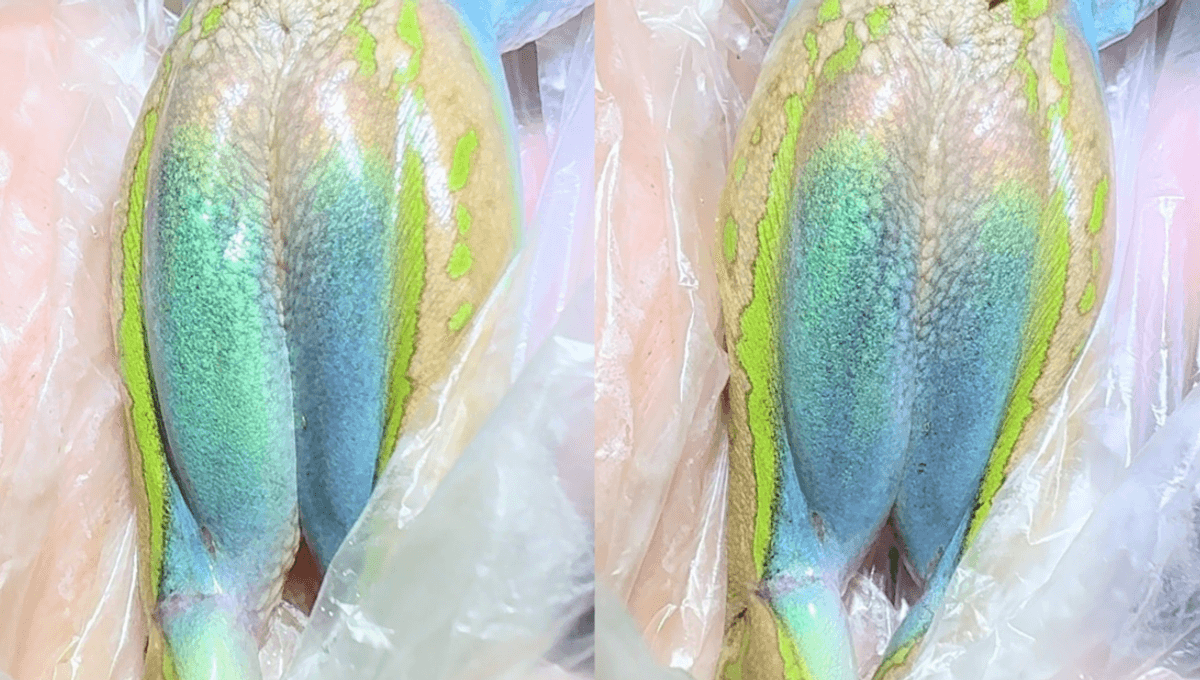
An Australian frog is drawing attention for a striking set of shimmering markings that have been compared to “sparkly hot pants,” making it a rare example of iridescence in amphibians. The unusual effect causes the colors to appear to shift depending on the viewing angle, giving the animal a flashy look not often seen in frogs and their relatives.
Iridescence is an optical phenomenon familiar from many shiny surfaces in nature, where color seems to change as light hits it from different positions. It is common in some birds, insects, fish, and marine life, but far less frequently reported in amphibians. That makes this frog especially notable to scientists and wildlife observers.
The discovery highlights how much variety still exists in amphibian coloration and how some species can display visual effects that are easy to overlook. While bright colors in animals are not unusual, true iridescence stands out because it is created by the way light interacts with surface structures rather than by pigment alone.
Beyond its eye-catching appearance, the frog offers another example of how evolution can produce surprising visual traits in unexpected groups. Its glittering, color-shifting patches add to growing interest in the many ways animals use light, texture, and color to stand out in the natural world.





