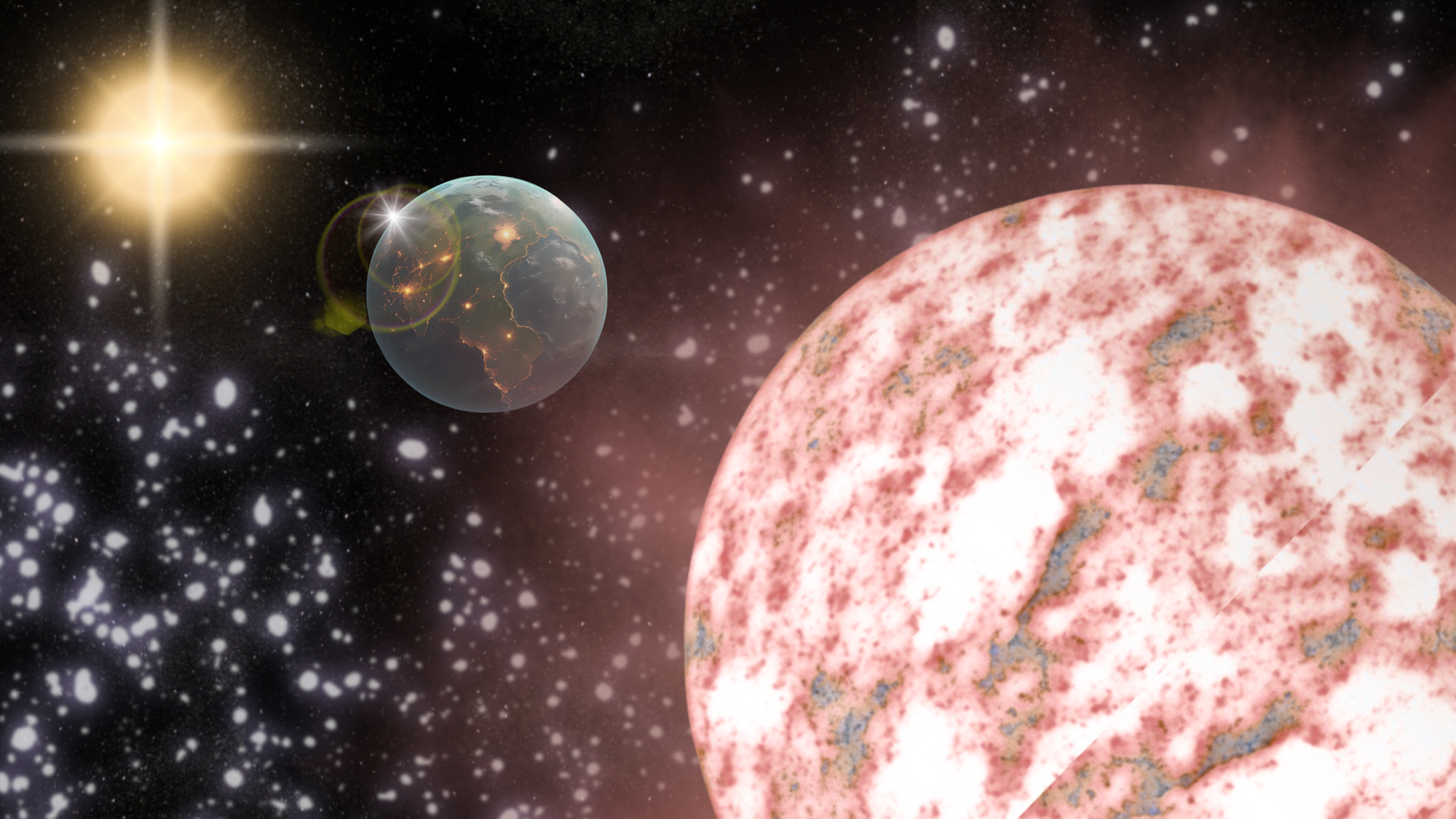
Astronomers may be closing in on what could be the first known moon outside our solar system, a finding that would mark a major step in the study of distant worlds. But the possible exomoon is not a simple, clear-cut case, and researchers appear to be dealing with an object system that does not fit easily into familiar categories.
According to the report, the system is difficult to describe using terms that work well in our own cosmic neighborhood, such as “planet” and “moon.” That suggests the objects involved may blur the line between those labels, making the discovery notable not only for what it might be, but also for how it challenges current definitions.
If confirmed, the detection would expand how scientists think about planetary systems beyond the solar system. A true moon orbiting a world around another star has long been an important target for astronomers, because it could reveal more about how planets and companion bodies form and evolve over time.
For now, the bigger story may be the uncertainty itself. Rather than neatly matching the examples seen around Earth, Jupiter, or Saturn, this distant system appears to be something more unusual, raising the possibility that astronomers are looking at either the first exomoon or an even stranger kind of celestial arrangement.