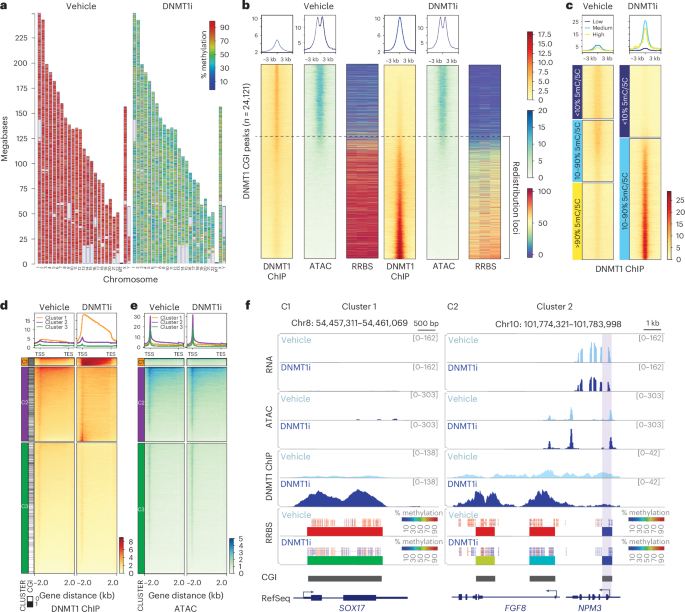
A new Nature study examines how DNMT1, a key enzyme in DNA methylation, carries out its gene-silencing role and how that activity is regulated inside cells. Using a highly selective inhibitor, the researchers were able to focus on DNMT1-specific functions and separate them from broader methylation effects.
The report highlights a major regulatory step: RFN4-mediated SUMOylation appears to make DNMT1 more mobile and more effective at maintaining DNA methylation. In practical terms, that added activity helps preserve repression across parts of the genome that need to stay quiet.
Among the targets are mega-intergenic RNAs and transcripts linked to endogenous retroviral elements. When those sequences are not properly suppressed, cells can enter a state often described as viral mimicry, in which internal genetic material is sensed in a way that resembles a viral threat.
The findings add detail to the epigenetic mechanisms that keep repetitive and potentially disruptive genomic regions under control. By clarifying how SUMOylation strengthens DNMT1 function, the study offers a clearer picture of how DNA methylation helps prevent inappropriate RNA expression and antiviral-like signaling.





